Supercharging a New Model for Scientific Research
Focused Research Organizations offer an innovative approach to scientific research, reimagining how projects are structured and funded in order to tackle problems that would otherwise go unaddressed, and explore ideas that might otherwise never see the light of day.
Specifically, FROs respond to a systemic chasm in the world of research. On the one side are university labs, usually built around a single professor and his or her post-doctoral students. This structure is ideal for many types of early research, but less well-suited to large and complex contemporary research projects requiring team science, multidisciplinary approaches, and scalable engineering solutions. At the same time, such large-scale research projects are often too speculative or early for funding through industry and conventional venture capital.
FROs leverage philanthropic support to bridge this gap, taking on challenges that require a greater level of team science or systems engineering than would be possible in an academic setting, but that are too novel and uncertain for major private investment. By gathering a full-time team of scientists, engineers, and entrepreneurs for a finite duration to produce high-impact solutions for science and technology—and yield products and approaches which may ultimately spin out profits—FROs can unlock major bottlenecks holding back the progress of an entire research field. Adam Marblestone, co–founder of Convergent Research, a nonprofit group which coordinates the efforts of almost a dozen FROs, compares the approach to projects such as the Hubble Space Telescope. “Hubble has lifted the boats of every astronomer. But it’s not something that an individual astronomer, no matter how brilliant, or even a consortium of astronomers, could build. It’s technology that speeds up science itself. But it’s also not a conventional kind of for-profit startup; it’s an industrial-style approach to building something that boosts science.”
Griffin Catalyst’s support for FROs expands its earlier efforts to accelerate innovative high-potential science, in areas such as COVID-19 research, computational medicine, and programmable therapeutics.
Who We’re Supporting
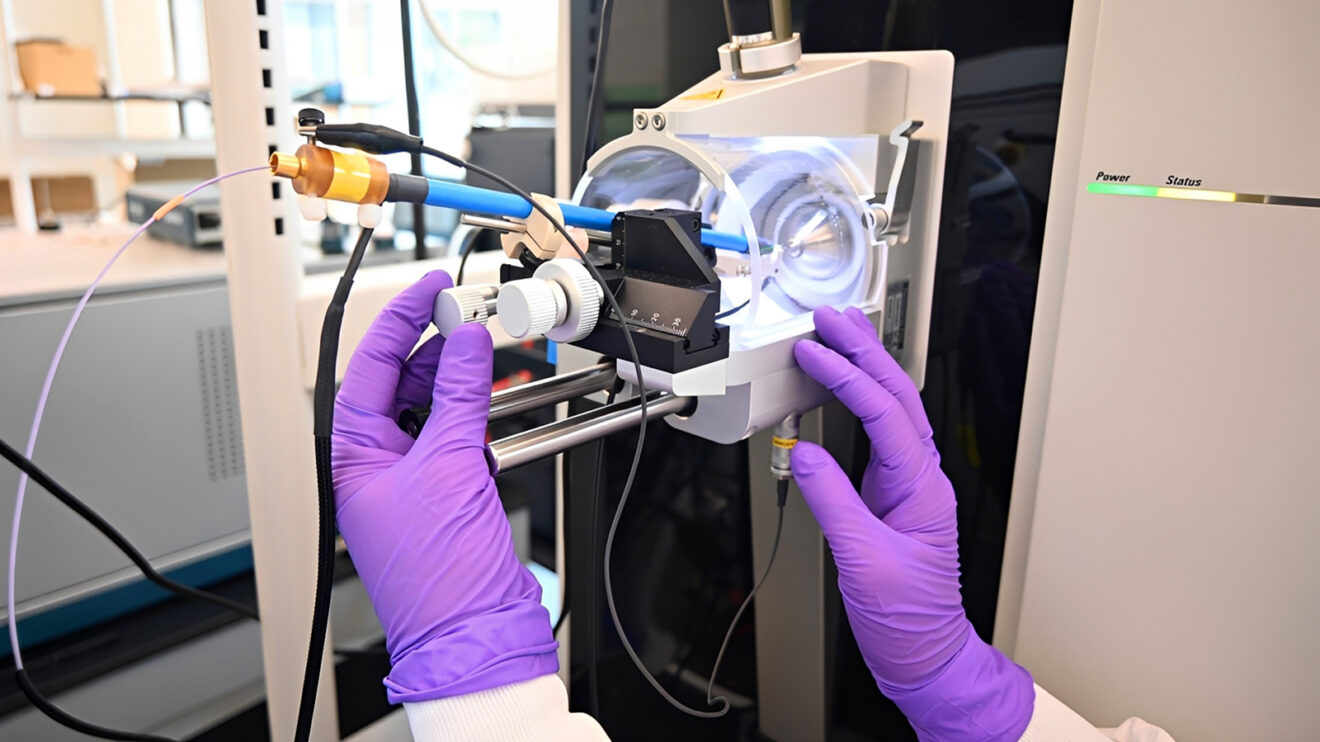
Griffin Catalyst began its support in this area with funding for two of the earliest FROs. The first, Parallel Squared Technology Institute (PTI), is developing technologies that aim to ultimately help reveal the causes of age-related diseases, including osteoarthritis and cancer. PTI is working to achieve a breakthrough measurement technique that, for the first time, maps proteins at the single-cell level—a key to unlocking many secrets of chronic and age-related diseases—at a large scale and sufficiently low cost to be broadly accessible to the biological research community. Although proof-of-concept academic work has revealed the possibility of “mass spectrometry” technology to map proteins at the level of individual cells, until now that technology has not been scalable to create large datasets, and is not widely accessible to scientists. Ultimately, the group aims for nothing less than a hundredfold increase in the cost effectiveness of measuring proteins at the individual cell level.
Through its partnership with Convergent Research, Griffin Catalyst is also supporting Forest Neurotech, a California-based FRO that is focused on developing a brain-computer interface (BCI) to tackle a variety of neurological disorders. Though deep-brain stimulation is considered key to ameliorating neurological problems, the neural devices for brain stimulation have remained crude, invasive, and localized to specific parts of the brain. Forest Neurotech aims to revolutionize how scientists can improve neurological conditions by way of minimally invasive implant devices that are capable of measuring and modulating activity across multiple regions of the brain—devices made possible thanks to advances in ultrasound transducers and miniaturized electronics. The technique is now a part of a major clinical trial in the United Kingdom, with $8 million in funding from the UK’s Advanced Research and Invention Agency, which describes the innovation as “the most advanced BCI in the world.”
Why It Matters
By supporting FROs, Griffin Catalyst is investing in the infrastructure that will drive impact and ensure that the solutions of the future aren’t stymied by systems of the past.
The extraordinary leap in biomedical research that PTI aims to generate, for example, will enable protein analysis at unprecedented speed, at lower cost, and at the level of individual cells. This advancement may enable researchers to uncover causes of chronic diseases of the brain, the immune system, and other complex organ and tissue systems. It will also advance treatment of aging and age-related diseases such as osteoarthritis and neurodegeneration, auto-immunity, and cancer.
The technology being pioneered by Forest Neurotech, meanwhile, holds out promise for helping people of all ages by treating a wide range of neurological challenges—especially those not limited to individual locations in the brain, but “circuit-wide” disorders ranging from depression and addiction to epilepsy and Parkinson’s disease.
Inspired by the success of individual FROs, in 2026, the National Science Foundation launched its new Tech Labs initiative, which aims to provide multiyear federal grants to teams of researchers pursuing technical and scientific breakthroughs. NSF will provide up to $1 billion in funding for independent research organizations to pursue and then scale up research projects with real-world applications in science and medicine, channeling the promise of FROs at scale for the common good.
What’s the Impact
FROs are charting a new approach to research with the potential to propel a wide variety of scientific areas. Most researchers are never asked what they would do with a larger, more multidisciplinary team and greater resources. The types of new tools and datasets that are emerging from FROs—from biology to neuroscience to math—are often those that researchers previously had little incentive to develop by way of conventional funding mechanisms.
With the support of Griffin Catalyst, Focused Research Organizations are leading the way to new kinds of innovative, results-oriented research, with the potential to revolutionize our capacity to address some of largest and most urgent scientific and medical challenges of our day.