Racing to Save the Penguins
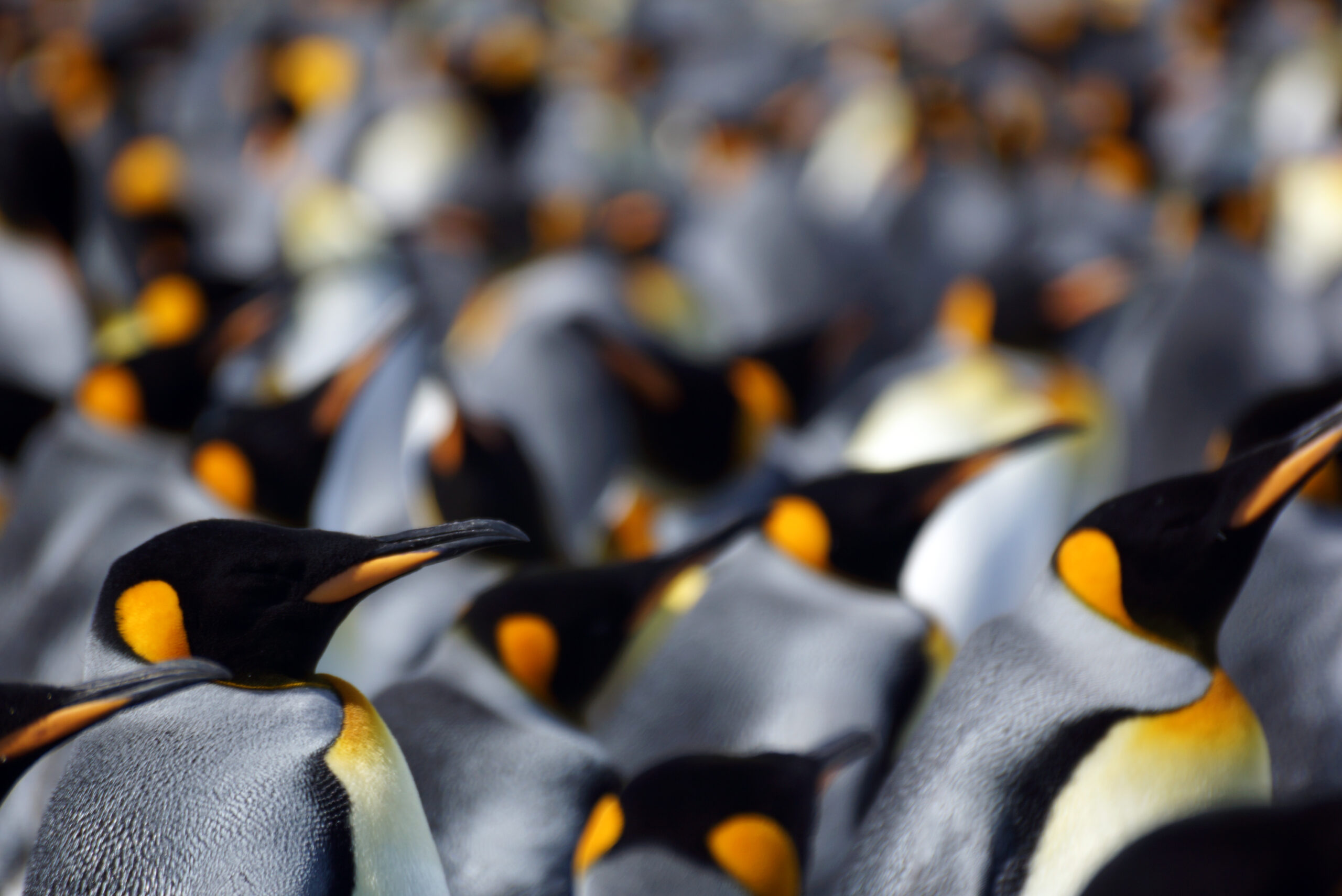
For the first time in recorded history, in recent years, avian flu reached Antarctica, threatening animals in an already fragile ecosystem. Griffin Catalyst responded proactively to this potential crisis—which, gone unchecked, had the potential to devastate Antarctica’s penguin, seal, and seabird populations, with global consequences. By supporting a new scientific monitoring and surveillance effort led by researchers at Cornell University, Griffin Catalyst helped scientists understand the nature and spread of the new virus and what immunity looks like for previously infected animals, with important implications for mitigation strategies and poultry, fishing, and tourism policies that may reduce its spread.
The Race to Save the Penguins (2:44)

In 2023, scientists grew increasingly fearful that a potentially fatal viral pathogen would spread across Antarctica and kill large colonies of seabirds and marine mammals. 

This strain of H5N1 avian influenza that has infected poultry farms and wild birds around the globe has now spread to mammalsreaching places previously untouched by high-pathogenicity avian flu. The virus caused major outbreaks in the islands off the southern tip of South America, including South Georgia Island, which has lost thousands of seal pups, and Scotland, which has lost 80% of its population of scavenging skua birds. In the Falkland Islands, just 750 miles from Antarctica, thousands of albatrosses and seals—and hundreds of penguins—have died due to the disease.   

Alarmingly, the virus has also made its way to Antarctica, where it threatens to devastate already vulnerable populations, including the familiar and beloved symbol of the continent: penguins. Scientists feared that the virus could travel quickly among species that had never previously been exposed to any strain of avian influenza, just as they were beginning their seasonal congregation and breeding in September 2024.  

Though H5N1 appears to be a “super” virus—with the capacity to kill its host and still spread—there was far too little data about its nature, spread, and animal immune response, limiting our understanding of the potential impact among penguins and other species on the continent of Antarctica. Support from Griffin Catalyst aimed to change that, to guide mitigation and policy responses to protect this fragile ecosystem. 

Who We’re Supporting

Griffin Catalyst’s support enabled a research team from the Cornell University School of Veterinary Medicine, with multidisciplinary experience in ecology, ornithology, and microbiology, to carry out research to better understand this threat.   

Working under the direction of Dr. Amandine Gamble, a professor in the Department of Public & Ecosystem Health at the K. Lisa Yang Center for Wildlife Health at Cornell, the team deployed new mobile field research labs to enable real-time monitoring and sequencing in targeted locations in the Falklands, South Georgia Island, and Antarctica itself in time for penguin breeding season in September 2024. The successful mission compiled the most comprehensive collection of viral sequences from the Antarctic and Subantarctic regions to date.  

Researchers collected and processed samples, offering the scientists a clearer picture of the H5N1 virus’s spread, impact, and immunity, informing mitigation approaches and helping to better understand current and future threats to penguins and other species.  

Why It Matters

Though it is difficult to control the spread of infectious diseases in wild populations, the data collected by the mobile labs has been critical for the scientific community’s understanding of the severity and spread of the outbreak and international work to evaluate strategies to prevent spread and reduce risk.   

In the short term, the surveillance has offered a fuller understanding of which species are spreading the disease (including “silent spreaders” which have no symptoms themselves), how closely related the various cases are, and why and how immunity is achieved in certain species.   

This information, in turn, is helping to establish long-term surveillance and response strategies to reduce or mitigate threats that can be at least partly controlled, especially non-natural, human-mediated factors that can lead to the introduction of dangerous new viruses, such as fisheries, invasive species, and high-risk tourism.  

In addition to their focus on the 2024 outbreak, the mobile labs can remain active for any potential future viral threat, and for general epidemiological research.   

What’s the Impact

Currently, Griffin Catalyst is one of the few philanthropic organizations supporting scientific research connected to this urgent conservation issue. With the persistence of the virus in South Atlantic Ocean animal populations, Cornell’s research has improved an understanding of virus dynamics in the region and broader bird-mammal transmissions. 

In addition to providing this better scientific picture of the current threat to Antarctica’s penguins and other species, the research aims to help shape longer-term public policy recommendations to reduce future risks to the species that inhabit the Antarctic region. 

In Brief

June 17, 2025
How did the end of the Age of Dinosaurs in Africa impact world history? That’s what researchers aim to uncover during a five-year project of excavation and analysis in the Northern Cape region of South Africa. Their study will explore fossil ecosystems and the biodiversity of sub-Saharan Africa during the Late Cretaceous Period to dramatically expand scientists’ currently limited understanding of this important epoch.
August 30, 2024
Since 2023, Griffin Catalyst has made transformative gifts to major health care institutions in Miami. Taken together, the support, totaling $150 million, represents an investment in the future of medical care and research in South Florida, allowing these institutions to recruit some of the best health-care professionals in the country, and propelling the region’s future.
October 28, 2024
Griffin Catalyst provided a seed gift of $2.5 million to accelerate the efforts of Feng Zhang, a faculty member at the Broad Institute of MIT and Harvard, to develop “programmable therapeutics,” an approach that holds promise for revolutionizing medicine by reprogramming cells to cure a wide range of human diseases.
June 10, 2026
Griffin Catalyst is supporting scientific innovation through a novel approach known as Focused Research Organizations (FROs). These initiatives take on high-risk, high-potential challenges in science that academic research groups and for-profit companies aren’t well-suited to solving—with a well-defined goal and a time-limited opportunity to make progress. Griffin’s $20 million in support of this model has helped propel two initial FROs—Parallel Squared Technology Institute and Forest Neurotech—to advance work with the potential to address a range of neurological and age-related diseases. Inspired in part by the promise of this approach, the National Science Foundation recently announced a new Tech Labs Initiative,
November 12, 2025
The health of one of America’s greatest and best-known watersheds, the Florida Everglades, has been under increasing threat in recent years from agricultural needs and the development demands of the fast-growing population of South Florida. Griffin Catalyst’s support for The Everglades Foundation—a three-decade-old nonprofit organization that helps to protect and restore the immense but fragile ecosystem—is allowing the group to expand its scientific team and resources in order to provide data-driven policy recommendations to the state and federal agencies that are leading the Everglades’ multiyear, multibillion-dollar restoration effort.
September 4, 2025
A three-year gift to the University of Chicago’s Education Lab has brought an innovative, high-dosage, math tutoring initiative to middle schools in Miami-Dade County in an effort to support and accelerate student learning in the wake of the COVID-19 pandemic. Initial results from the program, which started in spring 2024, are promising, suggesting that this approach can help tackle learning loss and enable students to catch up to grade level.
April 17, 2025
Griffin Catalyst is proud to partner with the nonprofit American History Unbound. The collaboration will present dramatic multimedia storytelling about World War I and World War II to audiences in New York and Miami, and nationwide through a documentary being filmed for broadcast on public television later this year, to coincide with Veterans Day. The unique combination of narration and imagery from renowned historian John Monsky, accompanied by music from Broadway stars and the Orchestra of St. Luke’s, brings to life in new ways two of the most pivotal events in the 20th century.
May 31, 2024
Launched in 2023, the Miami-Dade Innovation Authority leverages the power of competition and innovation to support tech start-ups, scale solutions to local problems, and improve lives. In less than three years, the Authority has taken on challenges as diverse as beach ecology, highway traffic, cargo transportation, waste disposal, airport passenger experience, and, most recently, access to affordable housing and emergency response.
May 23, 2024
To pay tribute to the nation's most distinguished military heroes—and to unite our country around the values their stories represent—Griffin Catalyst is supporting the National Medal of Honor Museum Foundation with a $30 million gift. The National Medal of Honor Griffin Institute is a key component of a three-pronged, $300 million effort that also includes a new museum in Arlington, Texas, and a new monument in Washington, D.C.