Ensuring South Florida’s Future by Saving Its “River of Grass”
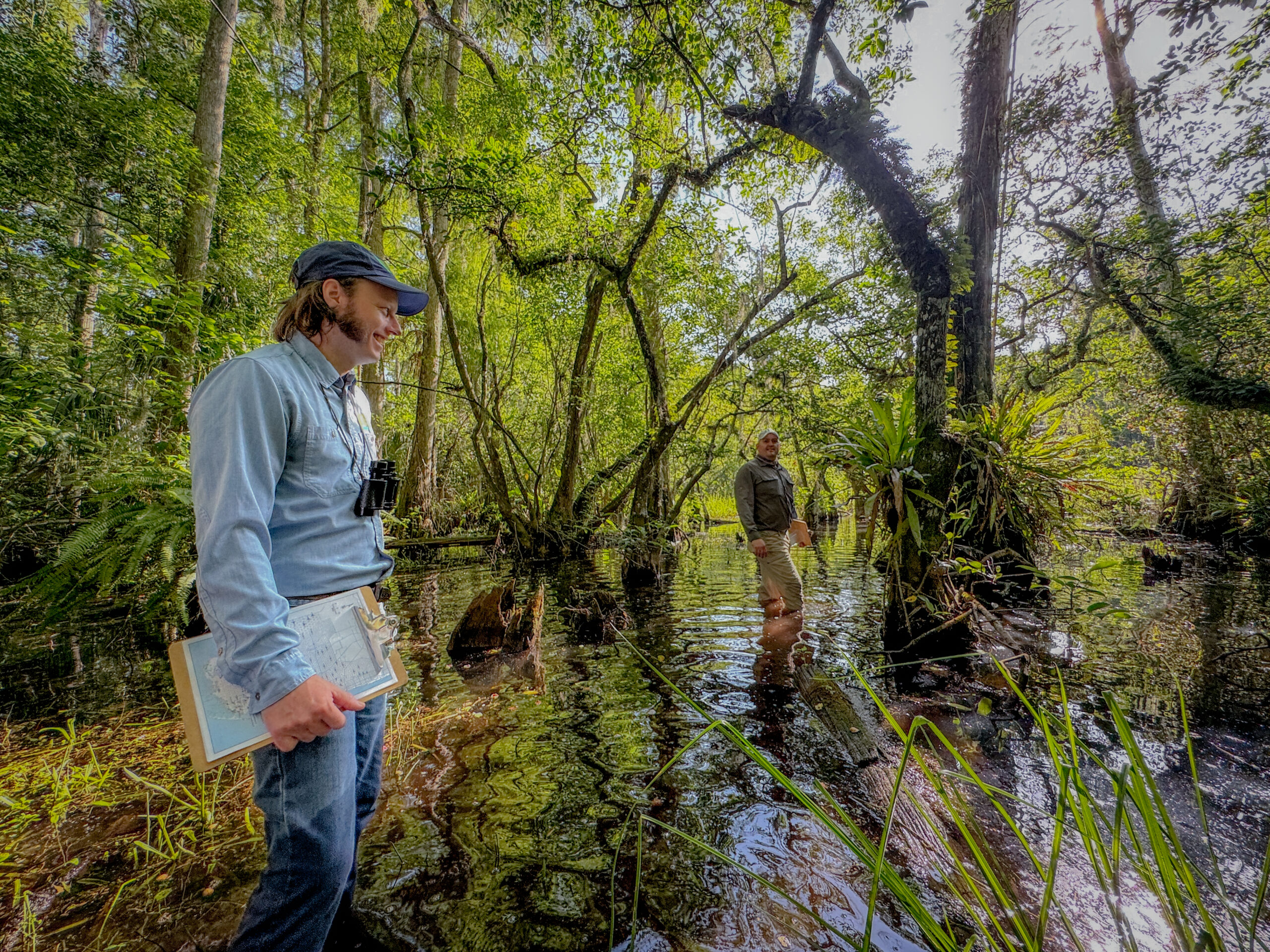
In 1993, two neighboring residents in Islamorada in the Florida Keys were deeply alarmed by the sudden dying off of seagrass in the waters where they fished together for tarpon, a saltwater game fish common to the area. To help stem further decline in the coastal area, the two men—the investor and philanthropist Paul Tudor Jones II and the Orlando-based developer George Barley—founded The Everglades Foundation.
The effort to save the 2-million-acre region that Floridians call “The River of Grass” has been daunting. The fragile and complex system of water and land has been under increasing pressure from the rapid growth of South Florida’s population, whose agricultural and development needs have resulted in extensive ditching, draining, and diversion of the wetlands’ waters, as well as increased water pollution. These have dramatically reduced the size of the watershed, limited where and when its waters can flow, and brought forth blooms of toxic algae and red tides.
If the challenges are enormous, however, so are the stakes. As one of Florida’s greatest visitor destinations and a system that fuels tourism-based businesses, the health of the Everglades is critical for the state’s $127-billion tourist economy—and is equally crucial for the nine million Floridians whose drinking water relies on the watershed. Fully 25 percent of all economic activity in the 16-county watershed depends on clean water, recent research has revealed, and that “clean water economy,” supported by the Everglades ecosystem, generates $330 billion each year in GDP. Meanwhile, two thousand plant and animal species—more than seventy of them threatened or endangered—also depend on this wilderness.
Those residents and endangered species have found a longtime advocate in The Everglades Foundation, which, with the impassioned and vocal support of famous Floridians like the late singer Jimmy Buffett, played a key role in shaping the Comprehensive Everglades Restoration Plan, which was passed with bipartisan support by the U.S. Congress in 2000. In 2024, the group’s efforts achieved one of the plan’s milestones with the start of construction on the Everglades Agricultural Area Reservoir and its surrounding Stormwater Treatment Areas, which will store and cleanse the waters flowing in from Lake Okeechobee and restore the crucial southern flow within the Everglades. But work to secure the future of the “River of Grass” remains far from complete.
Who We’re Supporting
In 2023, Griffin Catalyst provided an initial “science-to-action” gift to The Everglades Foundation, which has enabled the Foundation to expand its in-house research capacity, including the hiring four new scientific and economic researchers. The support has also bolstered the Foundation’s broader efforts to increase knowledge of the Everglades, and to develop innovative solutions for its restoration and for the future resiliency of coastal communities throughout South Florida.
Through this and other support, The Everglades Foundation’s trusted research and modeling have accelerated implementation of several crucial infrastructure projects, including those in the Restoration Plan, which is funded jointly by the federal and state governments. This past year, Congress has invested more than $400 million in Everglades restoration. The Florida Legislature has similarly committed to this work, designating an additional $800 million in this year’s budget for Everglades restoration projects.
This approach, using targeted private funds to unlock much larger public funding, has proved highly successful for The Everglades Foundation, which over the four years from 2019 to 2023 leveraged $38 million in charitable donations into $3.7 billion in government funds for what has been described as the world’s largest environmental restoration project.
Griffin Catalyst support enabled The Everglades Foundation to recruit and hire its first Chief Economist, Dr. Paul Hindsley, and its first Ecosystem and Resilience Scientist, Dr. Meenakshi Chabba. New research by Hindsley and Chabba, in collaboration with Earth Economics, has identified the Everglades as a $1-trillion asset that benefits real estate, tourism, outdoor recreation and other South Florida industries comprising the state’s “Clean Water Economy.”
Why It Matters
The Griffin Catalyst-funded research efforts continue to enhance our understanding of South Florida’s vast and complex ecosystem, and the scientific and economic significance of actions to secure its future.
The Foundation’s science-driven advocacy for the Everglades Agricultural Area Reservoir and related projects seeks to redress decades of harmful practices, including the release of polluted overflow from Lake Okeechobee onto the east and west coasts of Florida. These toxic overflows have led to an increase in blue-green algae outbreaks, worsened the red tides that can destroy fish and other aquatic species, and harmed tourism throughout Florida.
The importance of the Everglades ecosystem reaches beyond providing clean water. When healthy and hydrated, the enormous seagrass beds, thickets of mangrove, and acres of peat soil allow the Everglades to serve as a giant carbon sponge, ameliorating negative environment changes throughout southern Florida.
To help combat these threats, The Everglades Foundation offers a well-respected and highly reputable source of scientific, nonpartisan solutions for policymakers at all levels of government, from the U.S. Congress and the Florida Legislature to the U.S. Army Corps of Engineers and the South Florida Water Management District. Uniquely, the Foundation brings together first-class scientific and economic minds to develop strategies that not only protect the environment but ensure public dollars are spent cost-effectively.
What’s the Impact
The new research, modeling, and analysis efforts supported by Griffin Catalyst will advance the state of science in South Florida, resulting in data-driven interventions—storm-surge sequestration, flood control, aquifer replenishment, water-quality protection, carbon capture—that balance the needs of the region’s growing population with those of the natural environment, ultimately to the benefit of all.
Griffin Catalyst’s ongoing partnership with The Everglades Foundation continues its commitment to leveraging public-private partnerships and science-based approaches to solve local challenges, including in South Florida’s vulnerable low-lying areas. In the words of Carlos de la Cruz, Jr., the Foundation’s chair, “Success of the Everglades is key to success of the region.”