Fostering Innovation to Tackle Miami-Dade's Most Pressing Challenges
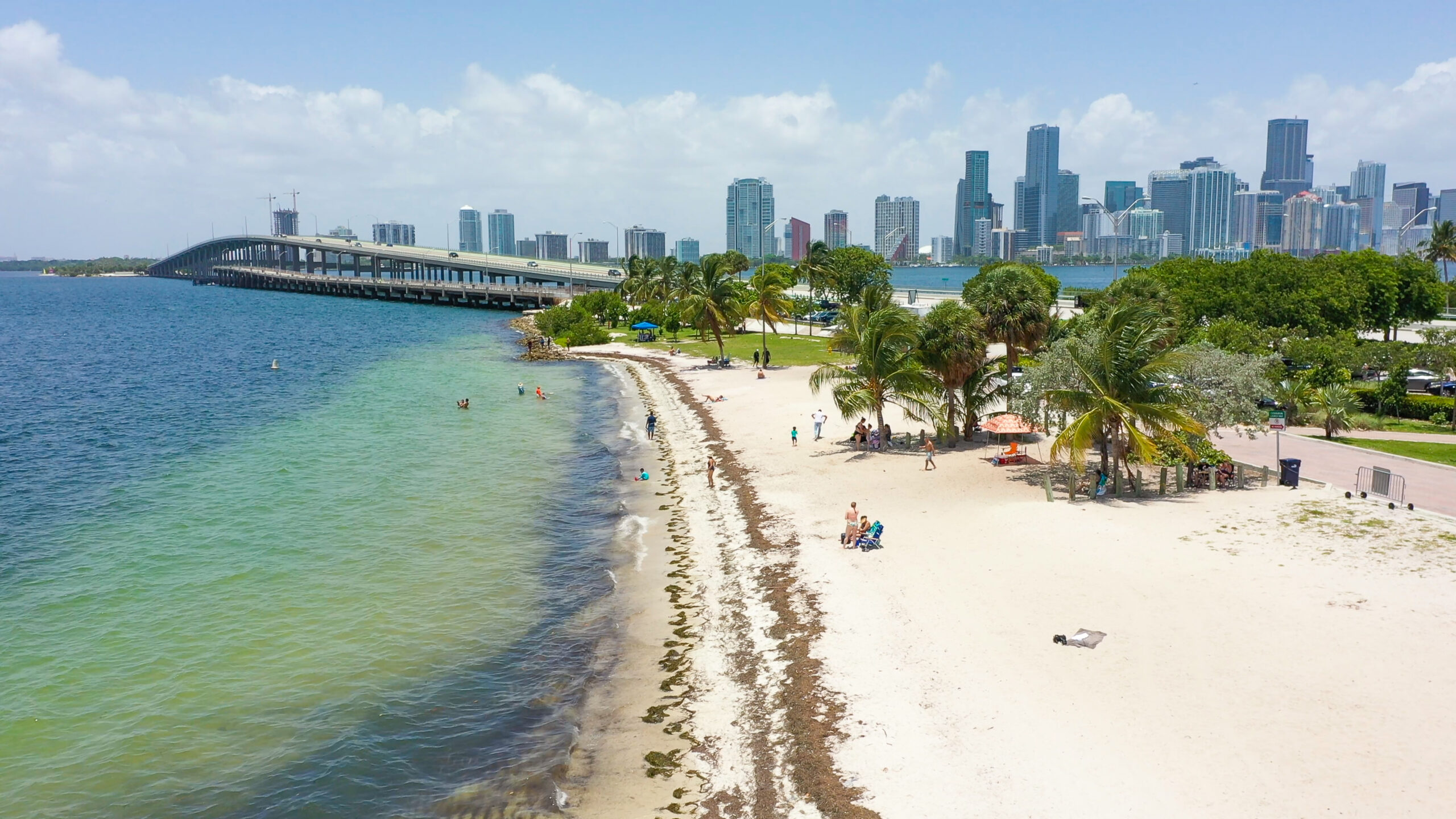
Focused on tackling pressing local problems and improving the efficiency and quality of public services, the Miami-Dade Innovation Authority (MDIA) is a public-private partnership that identifies and invests in early- to growth-stage tech companies building scalable solutions in the region.
With $9 million in support from Griffin Catalyst, the Knight Foundation, and Miami-Dade County, MDIA has launched seven “public challenges,” each focused on solving a specific citywide problem. The Authority selects one or more of the most promising solutions from entrants worldwide, tests those solutions over a three- to six-month period, then fast-tracks successful innovations to scale in the Miami-Dade region.
Who We’re Supporting
Griffin Catalyst helped to launch the Miami-Dade Innovation Authority in 2023. Inspired by the Israel Innovation Authority—which has helped Israel become one of the leading centers of tech innovation in the world—MDIA is focused on strengthening the relationship between Miami-Dade County and tech companies with solutions to regional challenges. To this end, MDIA’s “public challenges” provide $100,000 in funding to companies—both in Florida and around the world—whose winning approaches are innovative, practical and cost-efficient.
Under the leadership of President and CEO Leigh-Ann Buchanan, MDIA began its Public Innovation Challenges with an open call for innovative and sustainable strategies to address one of the area’s most urgent problems: how to repurpose sargassum, the floating mats of seaweed that wash up on Miami’s beaches during the summer.
Building on this experience, MDIA launched its second and third challenges, to improve the passenger experience at Miami International Airport and to enhance cargo visibility at PortMiami, two of Florida’s leading engines of economic development. It then moved on to three equally crucial areas of urban life, with challenges to improve the removal and diversion of waste in the region; leverage sensors, predictive analytics, AI and machine learning, and other technologies to enhance traffic visibility and management of highway and road traffic; and streamline the ability of ordinary citizens to apply and qualify for affordable housing. Its seventh and current challenge, developed in partnership with the Miami-Dade County Department of Emergency Management, Big City Emergency Managers, and Florida International University’s Academy for International Disaster Preparedness, seeks to expand Miami-Dade County’s capacity to respond to emergencies, using breakthrough technology to strengthen emergency management, and predictive analytics to improve real-time communication for rapid response.
Why It Matters
Beyond their direct value in improving the quality and efficiency of vital urban services, MDIA’s public challenges are furthering the goal of strengthening Miami-Dade County’s already growing tech community. Winners partner with the County to test their solutions, looking to determine the likelihood of success within three to six months. For approaches that appear promising, MDIA assists in fast-tracking projects through the County procurement process to ensure the technology is quickly scaled and implemented.
MDIA also serves as a beacon for companies globally that might otherwise have not had Miami on their radar, and partners with tech-talent pipeline efforts at Miami’s schools, universities, and other institutions to create additional pathways for emerging tech jobs.
Unlike traditional start-up accelerators, focused mostly on the bottom line, MDIA seeks to maximize both profit and impact—both on pressing local challenges and on job creation in the region
What’s the Impact
Within four months of starting operations in 2023, MDIA, with support from The Nature Conservancy, had launched its first Public Innovation Challenge, calling for tech companies to propose creative approaches to repurposing sargassum. In 2022 alone, Miami-Dade County had spent $4.2 million in sargassum collection, removal, and clean-up efforts.
By the start of 2024, the Authority had selected four winners and awarded grants of $100,000 each for the development of sustainable solutions. Florida-based Algas Organics proposed turning sargassum into fertilizer for farmers and Boston-based CarbonWave, PBC pitched upcycling the seaweed into an agricultural yield enhancer, while Miami-based Chemergy explored green hydrogen solutions and United Kingdom-based XMET Ltd. converted seaweed into polymers.
“This challenge is an example of our continued investment in having a future-ready infrastructure to work more efficiently, stay ahead globally, create jobs locally, and serve our customers better,” said Miami-Dade County Mayor Daniella Levine Cava.
MDIA has since launched five more initiatives, resulting in a host of winning tech solutions to urban challenges, from mobile-phone apps to ease passenger navigation through Miami International Airport, to an AI-powered platform that turns existing closed-circuit TV systems in cargo ports into an intelligent surveillance network, to cloud-based software, using machine learning, that can analyze roadway sensor data to identify traffic backups as they occur.
Leveraging competition to drive discovery and progress, the Miami-Dade Innovation Authority has become a national leader in identifying and supporting innovative, scalable solutions to some of the most pressing urban and environmental problems in cities today.