Inspiring Civic Engagement on America's Birthday
1. Introduction
The Constitution represents the pinnacle of the foresight, idealism, and intellect of our Founding Fathers. They created a structure of government that has not only survived but prospered for nearly two hundred and fifty years…it is really remarkable how the United States of America has led the world for the last two hundred and fifty years under the principles enshrined in that document.
Introduction
In 2026, America is celebrating a birthday: the 250th anniversary of the signing of the Declaration of Independence and the founding of the United States, a world-historical event whose impact and resonance grows deeper with each passing year. Inspired by Ken Griffin’s deep appreciation of America’s founding and belief in American exceptionalism, Griffin Catalyst is partnering with leading institutions and educational organizations nationwide to ensure the semiquincentennial is an opportunity for more Americans to engage with and learn from the values and stories that have shaped the nation.
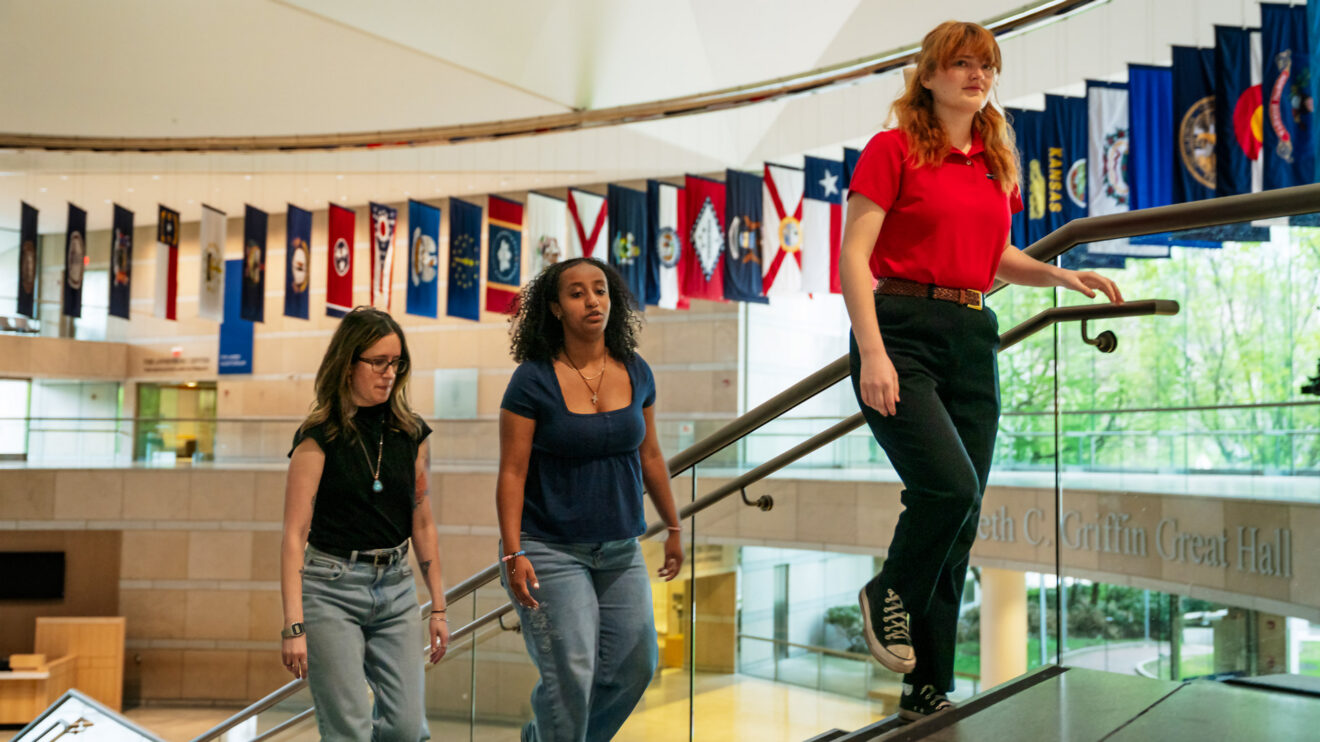
The next generation of American leadership starts with strong civic understanding. By leveraging rare copies of America’s founding documents loaned from Ken’s collection—including two original copies of the U.S. Constitution, a draft of the Bill of Rights, and early copies of the Emancipation Proclamation and the 13th Amendment—and by supporting new educational and engagement initiatives connected to these seminal artifacts of our republic, Griffin Catalyst is enabling millions of visitors to connect with the enduring principles that have defined the American experience. In doing so, these individuals can better take pride in the exceptional experiment in liberty and self-government those documents set in motion. To further enhance civic education in classrooms across the country, Griffin Catalyst is also supporting the Civic Star Challenge, a partnership between iCivics and the Bill of Rights Institute. The effort provides educators nationwide with creative opportunities to engage students in U.S. history and the values and principles that have shaped the nation. As students, classes, and schools complete these educational activities, they are able to be recognized with a “Civic Star.” In just one year, this national initiative has already engaged nearly a hundred thousand teachers and millions of students across all fifty states.
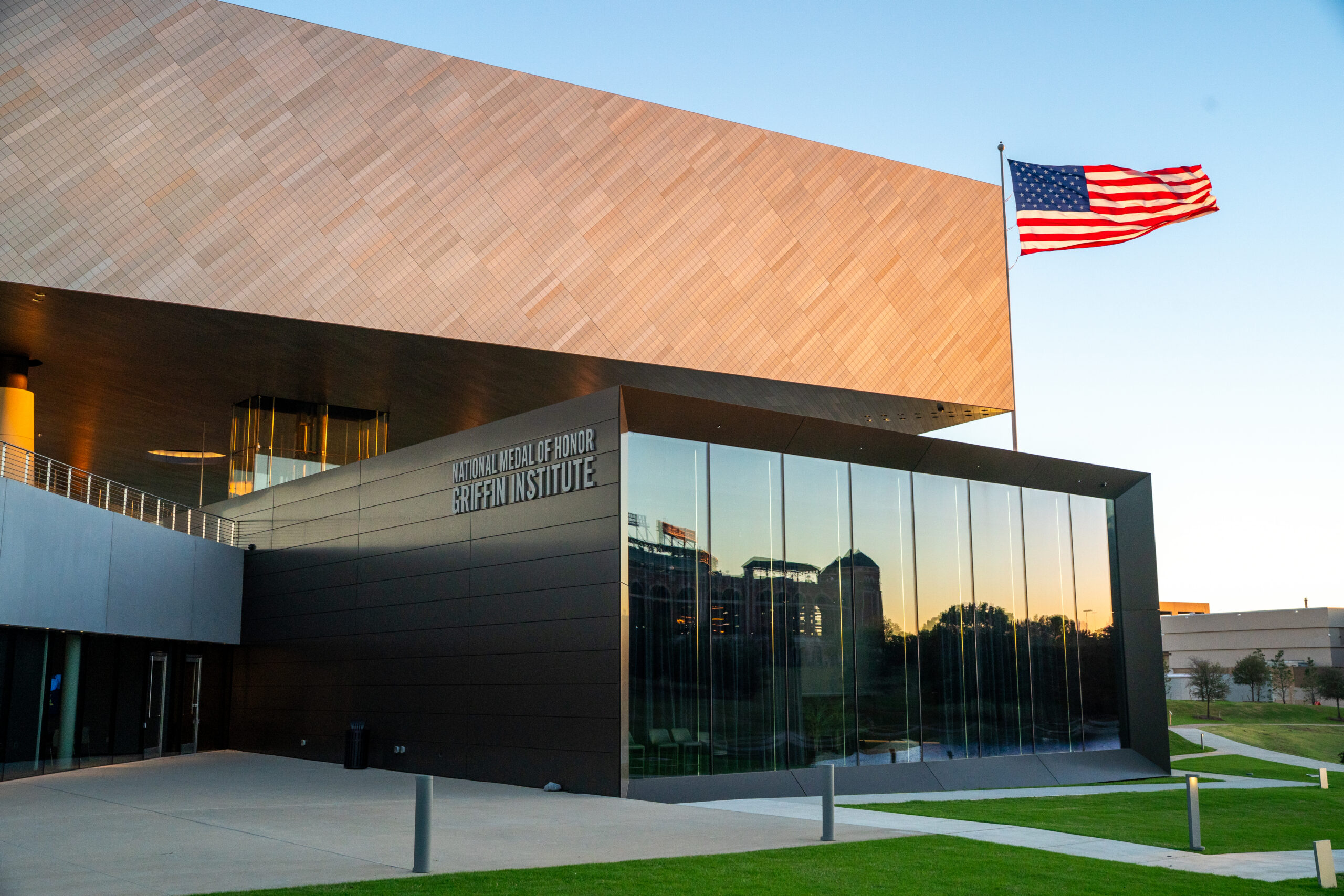
Across the heartland, Griffin Catalyst is connecting millions of Americans with stories of leadership, patriotism, and public service through towering figures from the country’s past 250 years. From National Medal of Honor Museum in Arlington, Texas, to the new Theodore Roosevelt Presidential Library in the Badlands in North Dakota, Griffin Catalyst is sharing stories of American heroes—both highly visible leaders and those who have served and sacrificed in quieter ways—with the next generation.
Woven throughout these efforts is a conviction that America’s founding principles—and the exceptional system of self-government they established—remain the source of the nation’s strength, guiding each generation’s work toward a “more perfect Union.”
By helping the next generation understand the principles that have sustained America for 250 years through these documents, sites, and nationwide education programs, Griffin Catalyst is ensuring that the country’s foundational principles are not only preserved but experienced. For America’s semiquincentennial, more Americans can participate in that inheritance and fulfill their responsibility to preserve it.
Enduring Principles, Founding Documents
“The most important message for the Museum is that the American Revolution is not the same thing as the Revolutionary War. It’s not something that happened and was over a long time ago, that it’s an ongoing experiment in liberty, equality, and self-government.”
To mark the 250th anniversary of American independence, Griffin Catalyst is helping a new generation of Americans encounter the enduring principles of the founding firsthand. Partnering with world-class institutions in Philadelphia, New York, and Washington, D.C., it is expanding access to the country’s founding documents so that the ideas they enshrine—liberty, equality, the rule of law, and self-government—can be understood, felt, and carried forward.
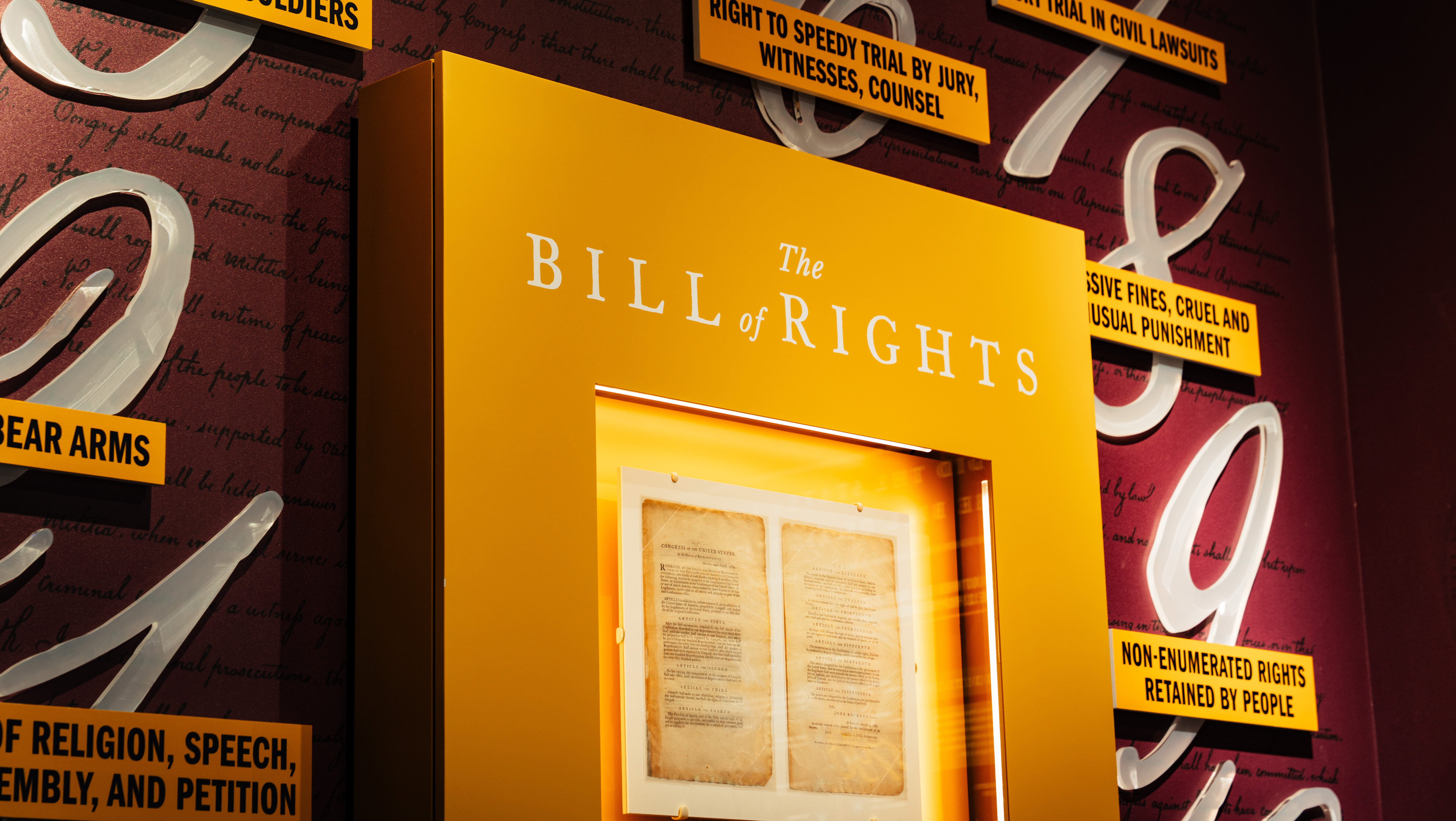
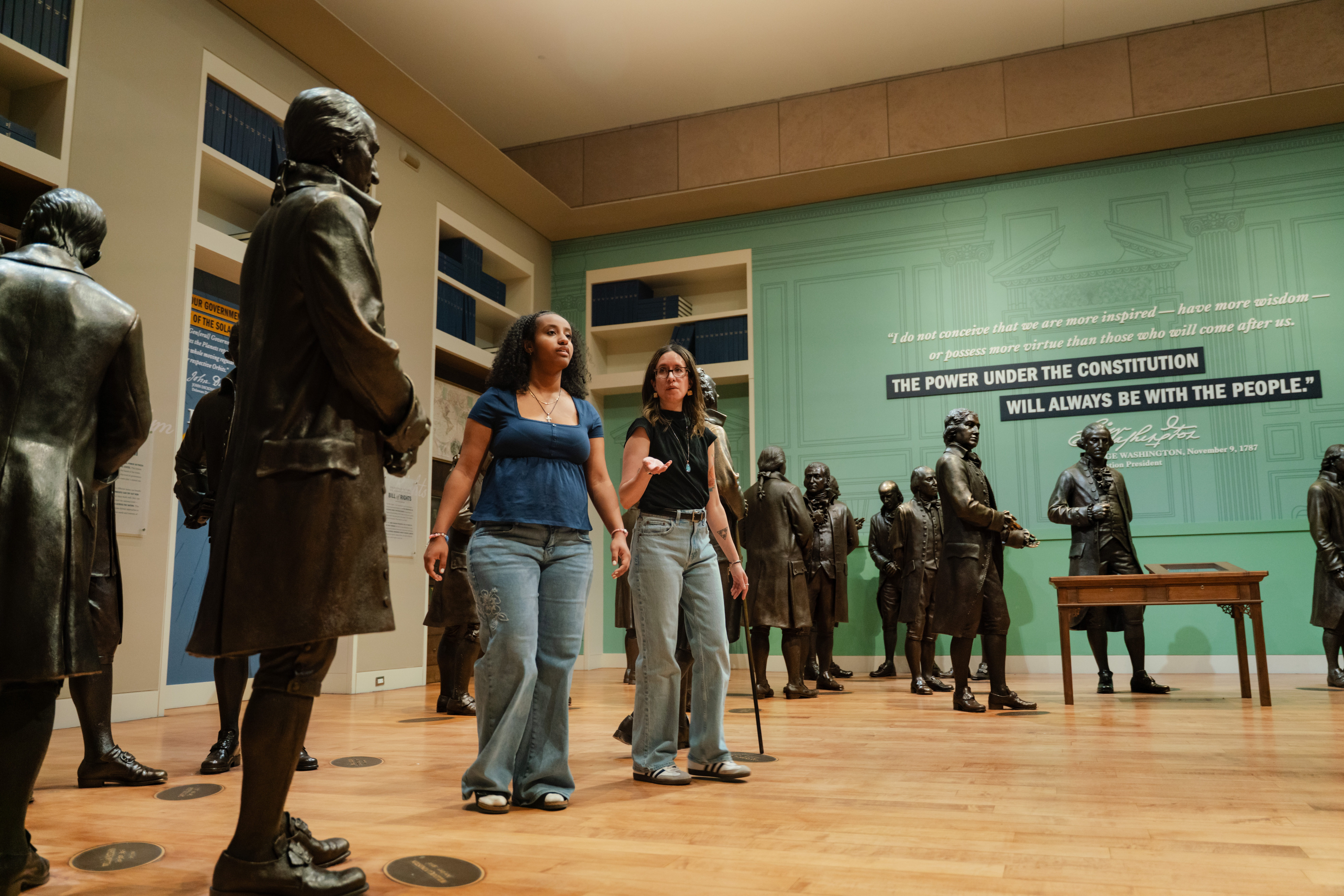
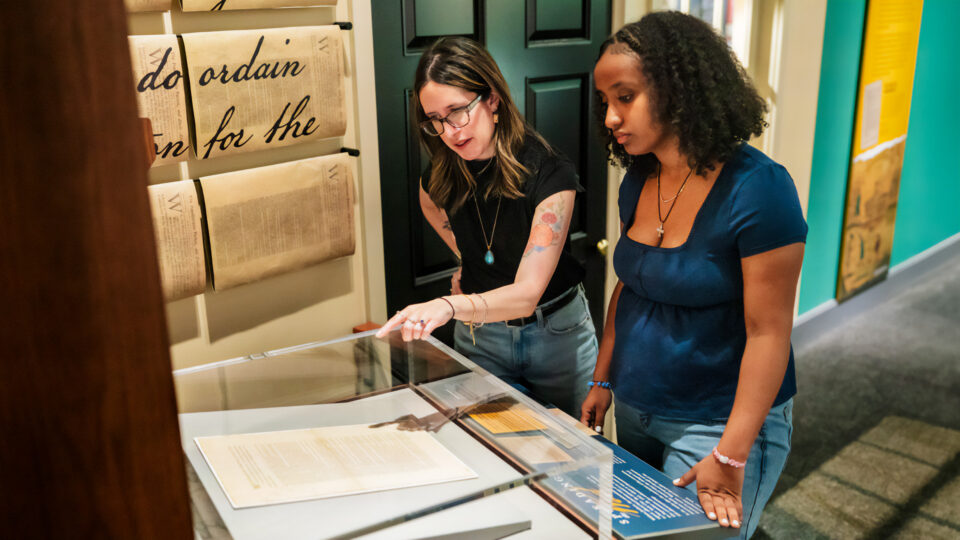
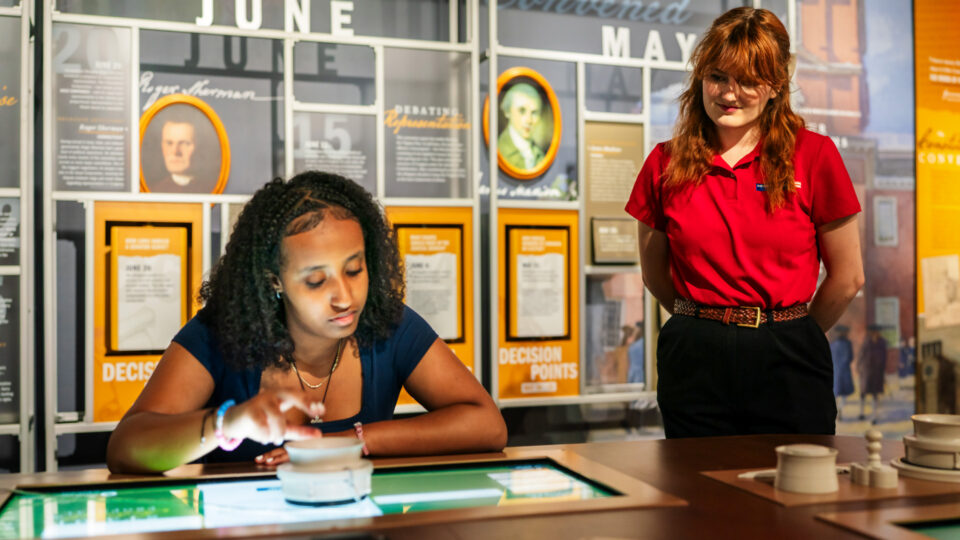
It begins by returning the Constitution to the very ground where it was written: the City of Philadelphia. At the National Constitution Center, which overlooks Philadelphia’s iconic Independence Hall, Griffin Catalyst has provided a $15-million gift—the largest in the Center’s history—to support the renovation of its core exhibitions and the creation of two new galleries, America’s Founding and Governing the Nation. Built around an original 1787 printing of the U.S. Constitution—one of only fourteen known to exist—loaned by Ken Griffin, the gallery takes visitors through the American Revolution and the drafting of the founding documents, including a rare, early copy of the amendments that would become the Bill of Rights.
“There’s something really special about seeing a founding document. It’s not the document itself, it’s what the document represents. To see it as a tangible thing can be really powerful, really moving, and a great way to help bring that history to life for people.”
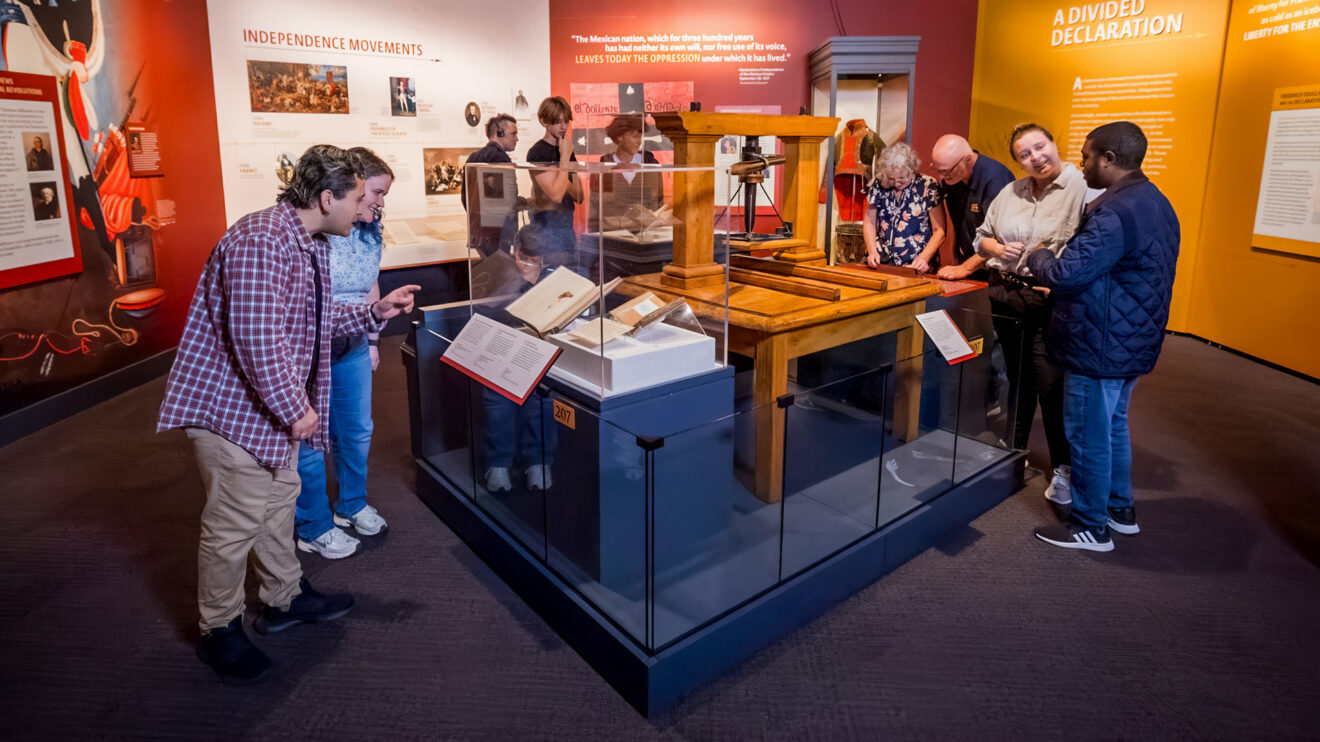
A few blocks away, the Museum of the American Revolution is sharing a major special exhibition presented by Griffin Catalyst. The Declaration’s Journey explores the impact of America’s Declaration of Independence on other movements for freedom and independence around the world. Told through 120 historic objects from institutional and private collections across twenty countries, voices from Martin Luther King, Jr., and Mahatma Gandhi to Elizabeth Cady Stanton and the Marquis de Lafayette tell visitors about the enduring impact of America’s fight for independence. The exhibition follows another rare document display from the Revolutionary Era, the “Stamp Act Defiance Placard,” among the earliest known evidence of a popular revolt against Great Britain in the American colonies, which Ken Griffin loaned to the Museum for a special, limited public display. The anonymous placards, dating to 1765, were posted by the burgeoning Sons of Liberty, capturing the soon-to-be independent nation’s revolutionary ideas and animating ethos of liberty.
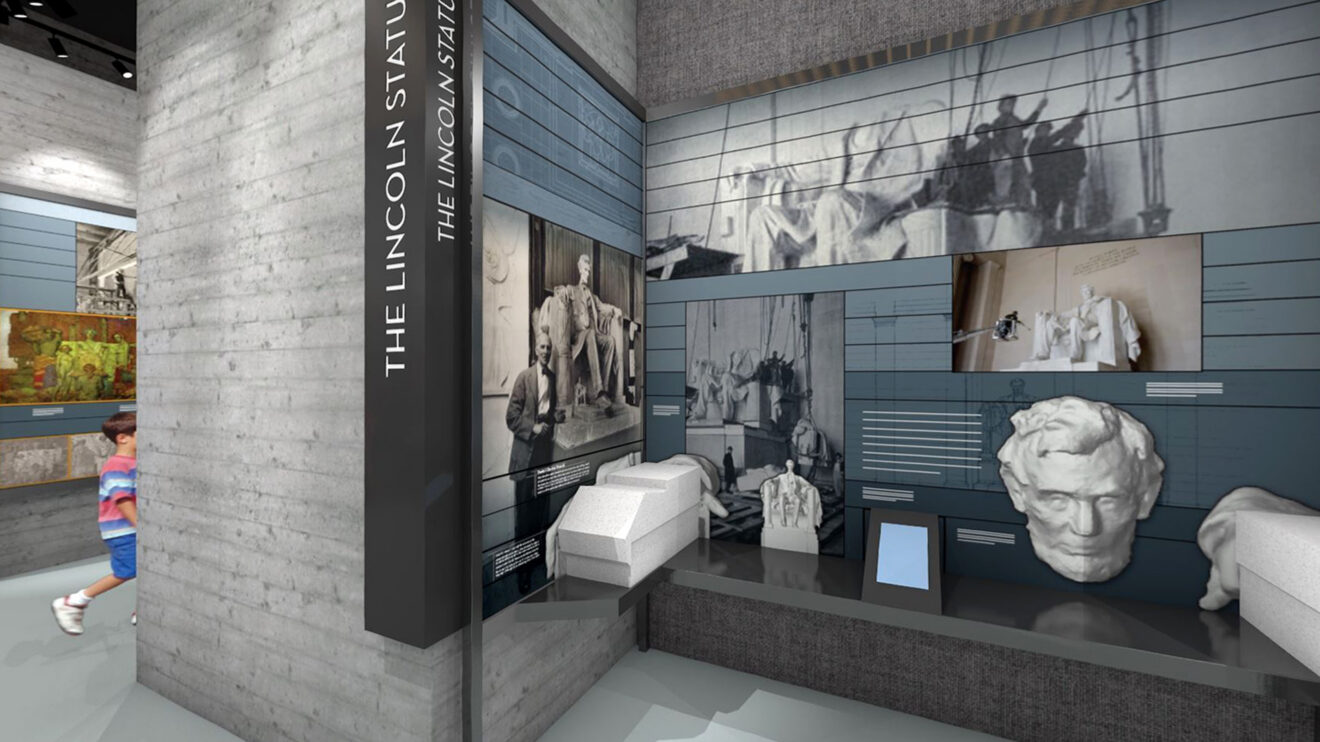
The story of the founding principles did not end in the 1700s. As Ken Griffin says, “Each generation must experience the sacred documents of our democracy—to learn from them and be inspired to carry our country forward.” In Washington, D.C., Griffin Catalyst is supporting an exhibition in the new Lincoln Memorial Undercroft featuring Griffin’s loaned copies of the Emancipation Proclamation and the 13th Amendment. These crucial Civil War-era documents, both signed by President Abraham Lincoln, dramatically expanded the founding documents’ principles of liberty and equality by extending the rights of American citizenship to, respectively, enslaved people in the border states, and then to all people in the United States, no matter their race or creed. Griffin’s stewardship of the Emancipation Proclamation, one of 27 remaining copies printed in 1864, and the 13th Amendment, one of only 15 known signed copies, reflects Griffin Catalyst’s commitment to “share these sacred documents as a reminder of our ongoing responsibility to strengthen the promise of America,” in Ken’s words.
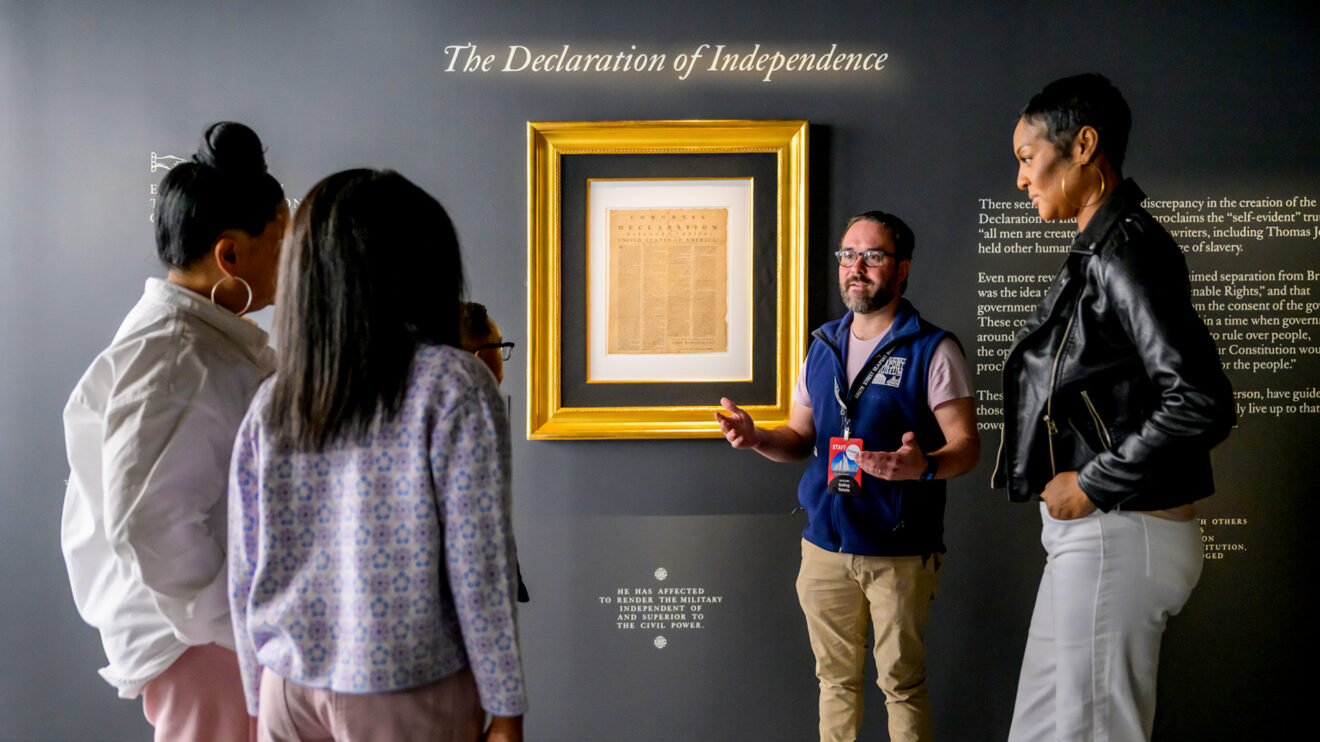
Those same founding ideas animate the celebration in New York, where Griffin Catalyst is supporting exhibitions at the South Street Seaport Museum in Lower Manhattan and the Museum of the City of New York on the Upper East Side. At the Seaport, The Promise of Liberty: Words That Shaped a Nation, aims to reintroduce the Declaration, the Constitution, and other documents of freedom, in the Museum’s words, “not only as history, but also as technology—a system of applying knowledge to solve problems.” The show gathers several rare historical documents—including a 1787 “Official Edition” copy of the Constitution on loan from Ken Griffin, the second under his stewardship—that help to tell the story of America. The Promise of Liberty plays a central role in a broader Fourth of July celebration called Sail4th 250, an international naval review and parade of sail in New York Harbor that will feature many of the world’s great “tall ships”—historic square-rigged sailing vessels—as well modern U.S. naval ships, recreating a historic nautical procession that marked America’s bicentennial in 1976.
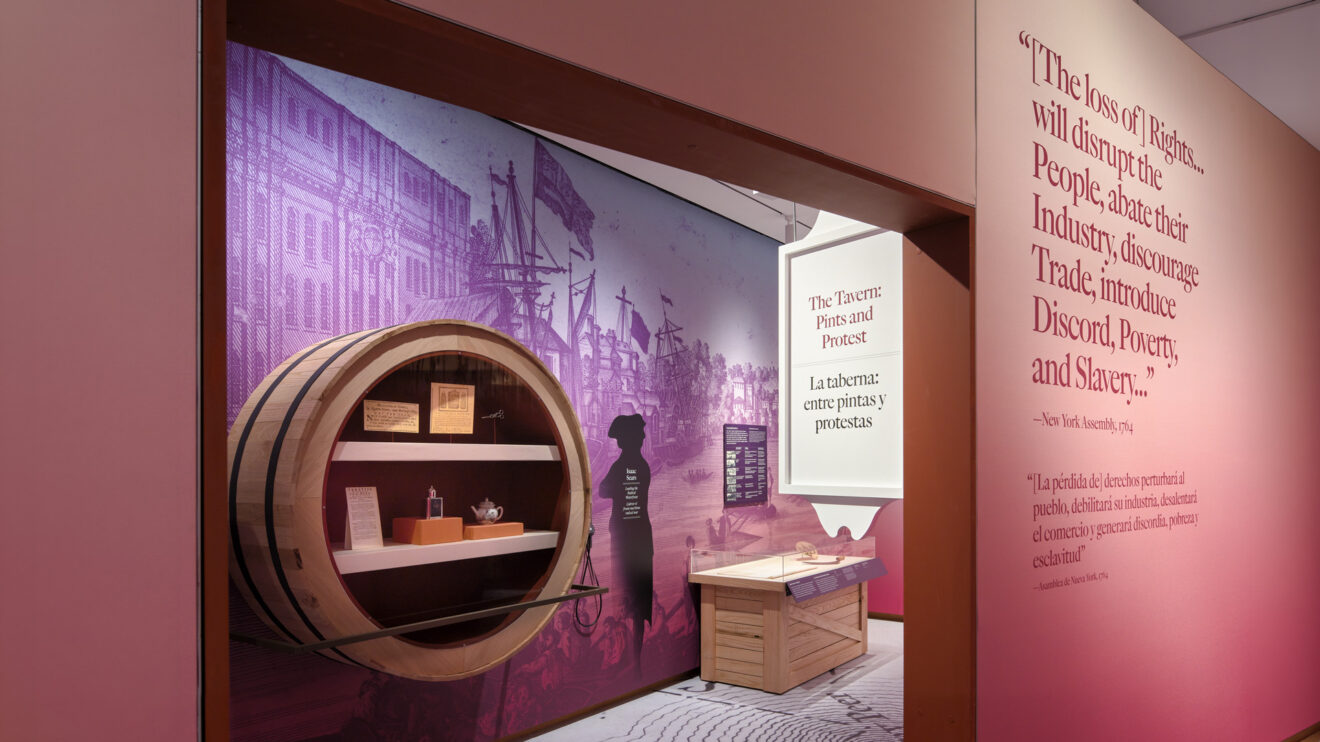
The Museum of the City of New York’s The Occupied City: New York and the American Revolution exhibition offers an immersive exploration of the city’s role during the Revolutionary Period and how it gave rise to a new nation. Among a diverse collection of historical artifacts and recreated settings, Ken Griffin’s “Stamp Act Defiance Placard” enables visitors to experience the instrumental role the nation’s first capital played in the American Revolution.
Together these exhibitions and loans will allow visitors to experience the nation’s founding documents first-hand, in a way rarely possible. These first-person encounters aim to inspire the public, and especially younger generations, with a renewed spirit of patriotism, civic engagement, and purpose, and an intention to carry forward the principles the documents enshrine—of liberty, freedom, individual rights, and constitutional government—into the years to come.
For Griffin Catalyst and for Ken Griffin, these partnerships also represent an opportunity to ensure the proper care and conservation of these delicate artifacts, helping to preserve and extend their life, so that they will continue to inspire the public for future celebrations—notably, the 250th anniversary of the ratification of the U.S. Constitution, which will take place in 2039.
America’s Heroes in the Heartland
Beyond the original 13 colonies, Griffin Catalyst is supporting efforts to ensure all Americans can experience the enduring values and principles of the United States of America. As Ken Griffin says, “few Americans have embodied the spirit of leadership as fully as Theodore Roosevelt,” the quintessential “man in the arena” who personified principle, action, and service to the nation.
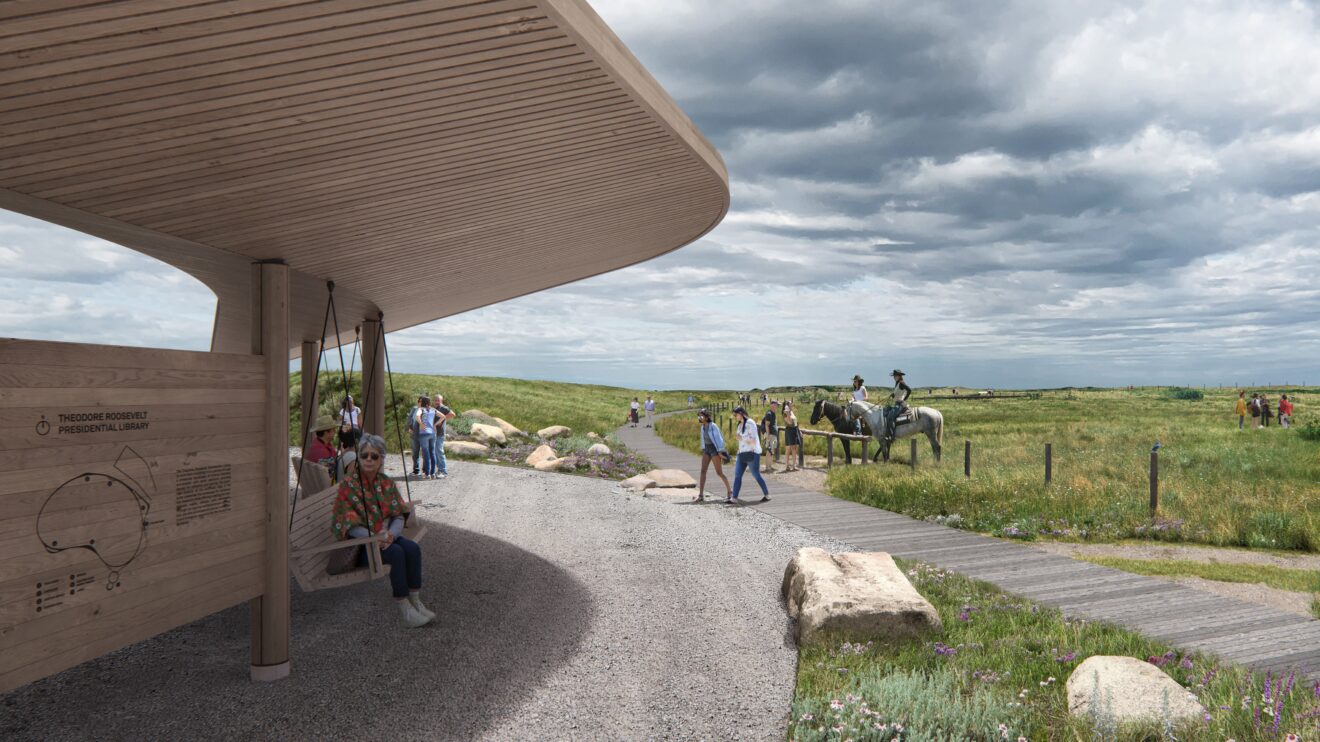
Located on 93 acres in the heart of the Badlands, in Medora, North Dakota, the new Theodore Roosevelt Presidential Library tells the story of the life and legacy of the nation’s 26th president and the making of the modern United States. Supported by a $26-million gift from Griffin Catalyst Founder Ken Griffin, the Library features more than 40,000 square feet of exhibition space, immersing visitors in Roosevelt’s life—from his boyhood collections to his presidency and beyond.
The Library invites visitors to step inside the decisions and convictions of a leader who expanded opportunity, championed conservation, and insisted that the American experiment must continue moving forward It is conceived not as a monument to one man but as a call for the future. Roosevelt’s life demonstrates the essential work of citizenship: carrying forward the promise of the founding for the next generation. In doing so, the Library extends the through line that runs through Griffin Catalyst’s wider efforts celebrating America’s 250th anniversary: Americans must continue to secure these principles and freedoms in every generation.
This effort builds on Griffin Catalyst’s existing support for institutions championing American values beyond the coasts, including the National Medal of Honor Museum in Arlington, Texas, and Crystal Bridges Museum of American Art in Bentonville, Arkansas. Himself a Medal of Honor recipient for valor in the Spanish-American War—in the famed “desperate and gallant charge up San Juan Hill”—Theodore Roosevelt is one of the many voices of Medal of Honor recipients the museum’s National Medal of Honor Griffin Institute leverages to teach Americans of all backgrounds the values of America’s highest military decoration. In neighboring Arkansas, Ken Griffin first displayed his original copy of the U.S. Constitution, ensuring Americans across the country had the opportunity to see—and be inspired by—this “sacred document that enshrines the rights of every American and all those who aspire to be,” in Ken’s words.
Civic Star Challenge
“What we’re trying to do with Civic Star Challenge is not make it only a history lesson, but to turn also to the civic side—where young people are, at the age-appropriate level, understanding: I can actually act on these principles. And of course, there’s going to be a big debate about them. That’s the American way. We’re not going to try to eliminate debate. We’re going to embrace it.”
If the founding documents are to remain a living inheritance, each generation must learn to claim them. To carry the principles of the founding into the nation’s classrooms, Griffin Catalyst is partnering with the Bill of Rights Institute and iCivics to support a nationwide educational initiative called the Civic Star Challenge. The “challenge” is for students, teachers, classes, and schools to complete a minimum number of civic learning, engagement, and service activities to earn a “civic star.”
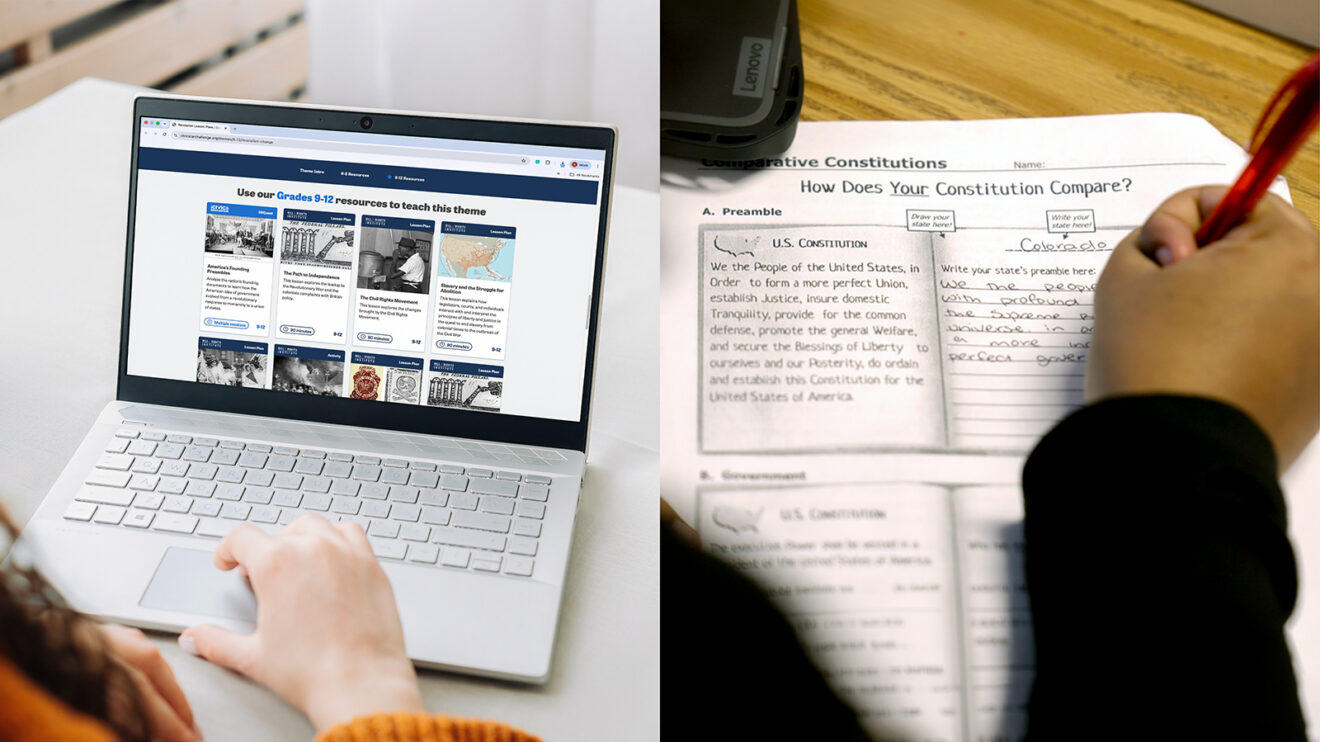
The initiative, made possible with founding support from Griffin Catalyst, offers a series of deep-learning opportunities, lesson plans, and carefully crafted activities designed to encourage engagement with history and civics for elementary, middle school, and high school students across the country. The program seeks to address a longstanding problem in the nation’s K-12 classes, which is the lack of time and resources available for subjects related to the meaning or tradition of American government. “Your average elementary school teacher is lucky to get twenty minutes per week on civics and history,” notes David Bobb, President and CEO of the Bill of Rights Institute. “Some of them get twenty minutes per day. But it’s a rare teacher that has much time at all.”
In order to get kids to genuinely wrestle with these ideas, you have to meet them where they are, and say like, “Hey, did you know that there was this whole idea about how we should behave based on human nature from these two guys named Hobbes and Locke?” And that’s where iCivics comes in, building those connections: “Did you guys know that this is in the Constitution? Did you guys know that this is part of the Bill of Rights? Do you realize that these things that you love and care about are all based on actual sources?”
Working together, BRI and iCivics curated a comprehensive “one-stop shop” for teaching and reflecting on America’s past, present, and future, including both traditional instructional materials about the founding period, as well as an online toolkit offering easy, step-by-step instructions related to each educational activity. The result is an inquiry-based, engaging framework that begins with the American Revolution and Declaration of Independence and traces how the founding’s enduring principles—liberty, equality, and self-government—have shaped the nation across its entire 250-year history.
Organized along three grade bands (K-2, 3-5, and 6-12), the programs encourage students to explore themes such as revolution and change, civic institutions, voting and civic engagement, the social contract, consent of the governed, equality, and life, liberty, and the pursuit of happiness. These themes are incorporated into classroom activities and assignments of all kinds, from creating a TED Talk-style script, to producing art projects and renderings, to writing poetry or drawing a political cartoon. Once students demonstrate their completion of a minimum number of activities, teachers apply for a “civic star,” publicized on school websites and in local media, and become eligible for financial awards from a prize pool.
The Civic Star Challenge recently completed its first iteration, offering a strong foundation for future civic learning efforts. Teachers reported more than 4.4 million civic impacts, representing more than 44 million minutes of student engagement, and shared nearly 4,000 testimonials about civic learning in their classrooms.
As the program moves forward, iCivics and the Bill of Rights Institute are focused on building from this momentum—using teacher engagement, student stories, and the broader reach of both organizations to deepen a new generation’s pride in, and stewardship of, the principles that have made the country successful.
A More Perfect Union
The Constitution created the framework and foundation, and as time moves on, we can amend it to what our society needs. We’ve put a new definition on the words “we the people,” and we can include more people into our Constitution. So it’s constantly growing.
At the heart of America’s 250th celebration is a simple conviction: the principles of the founding are not relics but the living source of the nation’s success, and each generation is called to renew its sense of excitement, urgency, and pride in them. “When students see these pictures of powdered wigs, and they hear fife-and-drum soundtrack, the whole thing can just seem completely irrelevant to the 21st century,” observes David Bobb. “And so, what we’re saying is, actually, given the themes that are there, they’re very relevant.” The enduring principles of the American founding—liberty, equality, self-government, and the dignity of the individual—have extended and amplified over 250 years through intense debate, and continue to define the challenges and opportunities of American life to this day.
Across all of these initiatives, there is a focus not only on the founders themselves, but the later generations they inspired—including determined men and women who were, in many cases, scarcely older than the students viewing the documents, or participating in the Challenge. In doing so, the hope is that more Americans—today and in future generations—have a deep appreciation for America’s exceptional nature and system of government, unique in the course of human events, rooted in the dignity of each individual, and with reverberations throughout the world.
America remains the world’s greatest engine of freedom, innovation, and opportunity precisely because every generation chooses to preserve it—and Griffin Catalyst’s aim is to help more Americans take up, and pass on, that inheritance. “And so you go to the protest signs that are held, oftentimes by teenagers, who are standing for their civil rights,” David Bobb notes. “The civil rights activist John Lewis started off when he was seventeen doing this work. He was twenty-three when he gave his speech at the March on Washington in 1962, and what he said is, “‘we have to keep fighting so that the revolution of 1776 can be completed.’”