Learning Lessons from America's Heroes
1. Introduction
We need to equip the future leaders of America with the tools they need to ensure our country remains the world’s leading power and a beacon of hope globally. There is no better place to start than with the Medal of Honor values: integrity, courage, commitment, sacrifice, citizenship, and patriotism. The special place that Medal of Honor recipients hold in the hearts of Americans—and the significance of the lessons their lives and actions represent—will serve to connect the country through their example of leadership and character.
Introduction
Established by President Abraham Lincoln in 1861, the Medal of Honor is the country’s highest decoration for valor in combat. Of the more than forty million Americans who have served in the U.S. Armed Forces, only 3,533 people have been awarded the medal, including 64 living recipients. The National Medal of Honor Museum Foundation was established to preserve and share the stories of these heroes and to celebrate the values they embody—duty, honor, and courage. Through its work, the Foundation seeks to educate future leaders and inspire a lifelong commitment to service in their communities and to the nation.
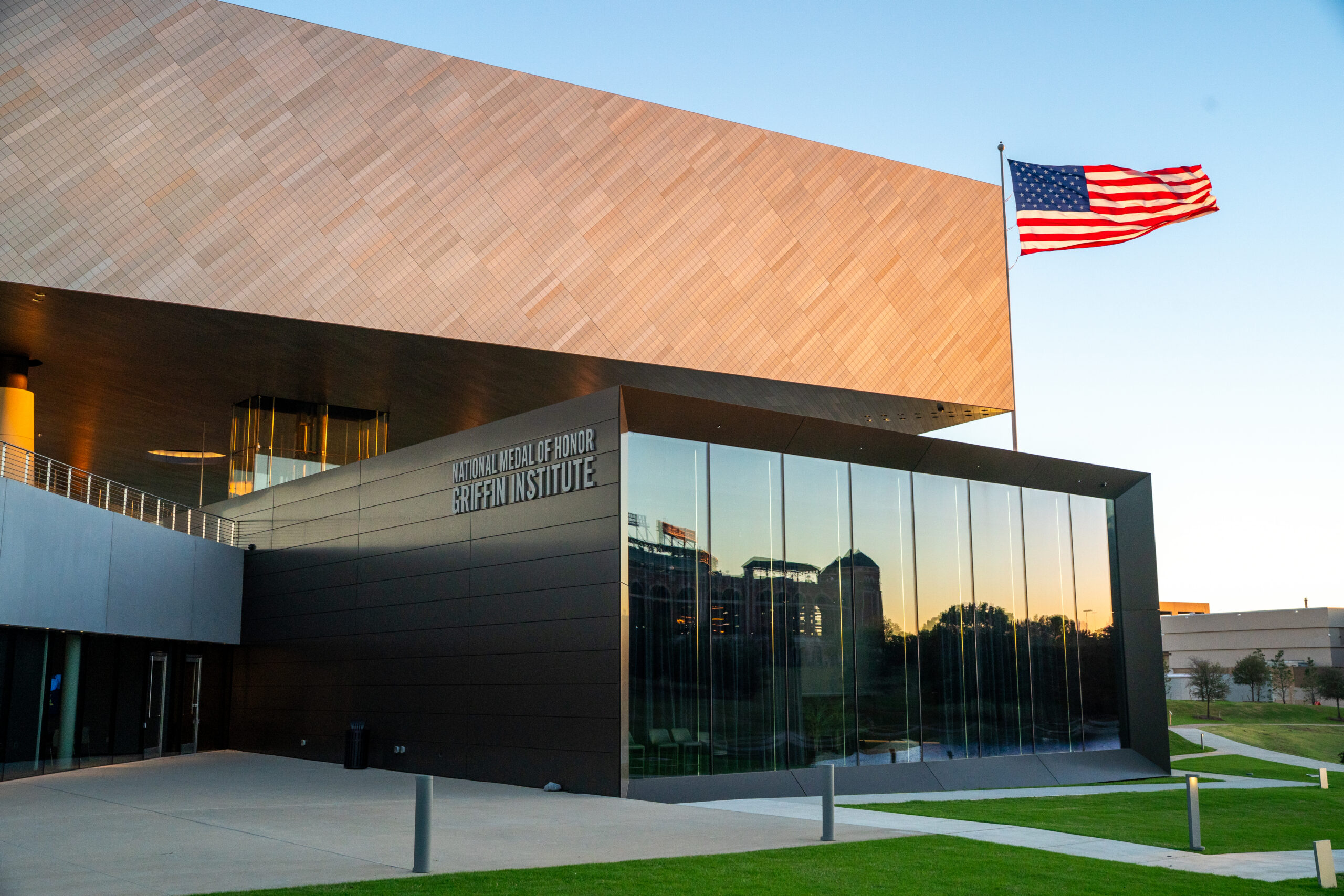
In 2023, Griffin Catalyst provided the Foundation with a $30 million gift to establish the National Medal of Honor Griffin Institute, a leadership institute dedicated to inspiring a broad range of individuals through the significance and lasting lessons of the Medal of Honor. The Institute is located within the new National Medal of Honor Museum in Arlington, Texas, opened in 2025, which has quickly become a popular destination for visitors from across the country. A third element of the project, a National Medal of Honor Monument in Washington, D.C., still in planning, will honor Medal of Honor recipients in our nation’s capital and serve as an enduring tribute to their service and sacrifice.
The need for elevating the values of the Medal of Honor is clear. In the United States today, there has been a growing lack of trust in our institutions and an alarming rise in polarization and division among Americans. While there is much that unites us, that common ground is not always reflected in today’s public dialogue. The values of the Medal of Honor and the leadership lessons of its heroic recipients provide a much-needed platform to instill Americans with a sense of service and civic duty.

The National Medal of Honor Griffin Institute
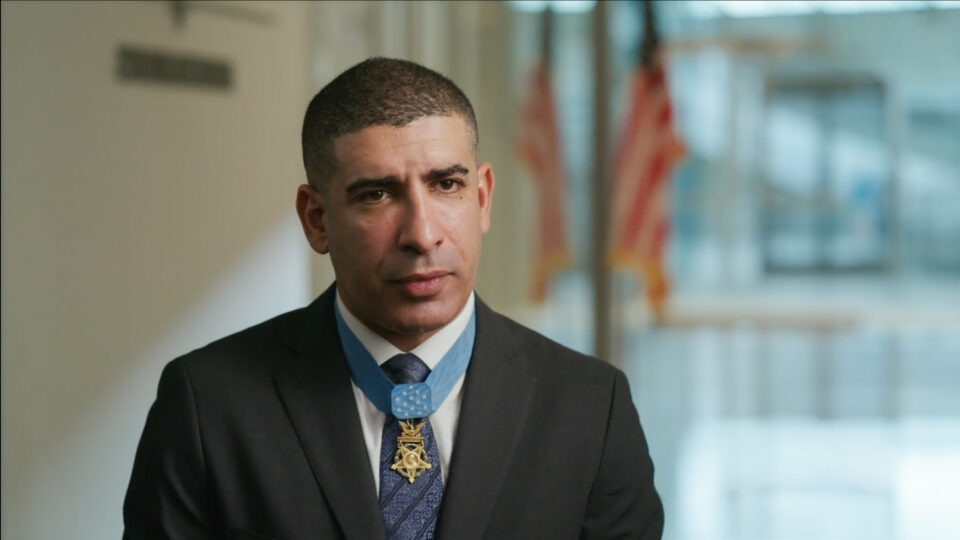
We believe that through our stories of service, we not only will entertain [young people] but give them some things to put in their kit bag…so that one day they have the ability to be a little bit more decisive, a little bit more confident, a little more risk-taking. But more importantly, to be proud: to be proud of who they are, proud of their country, and to understand that the reason is because some grown-ups have done some really difficult things to make sure that they have the opportunity today to be whoever they want to be.
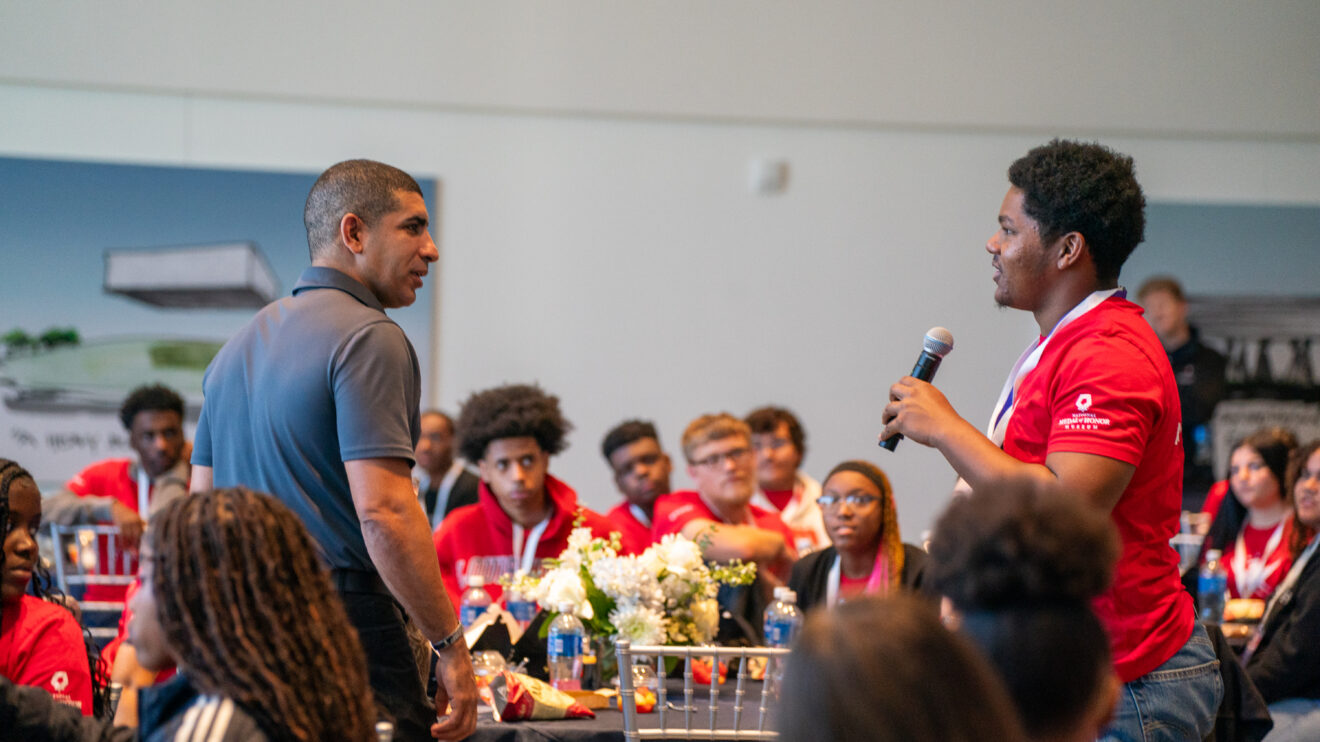
Through its new facilities and programs within the National Medal of Honor Museum, the Griffin Institute hosts national and regional conferences, seminars, forums, experiences, and immersive programs for a wide range of visitors and participants. “The Museum itself is the vault of the [Medal of Honor] values,” explains the Foundation’s chair, Charlotte Jones. “The Griffin Institute is the vehicle that espouses those values across the country.”
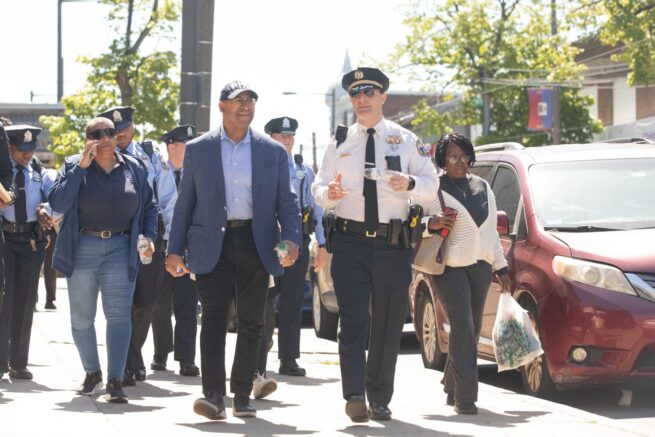
For K-12 students and their teachers, the Center for Character Excellence promotes the behaviors and choices of “everyday heroes” through a dynamic curriculum, interactive learning, and immersive experiences. Peer leaders learn how to lead in the moment, and both students and teachers are provided opportunities to support and encourage each other as they apply the lessons of the Medal of Honor in their own lives.
In addition to programs for student groups visiting Texas, the Institute is partnering with over 29,000 schools across the United States, who are using its dedicated curriculum to reach more than one million students. The curriculum focuses not only on the heroic deeds of the Medal’s recipients but on the ways that students might use the lessons of the Medal in day-to-day situations and challenges they face.

You learn a lot about integrity from the Medal of Honor and how you can use it in your everyday life. Like if you’re taking a test and somebody says, “Can you give me the answers? Nobody will know.” And you say “no,” because if you do something bad you think is small, and you keep doing small bad things, you’ll end up not making the right choice when it actually counts and matters.
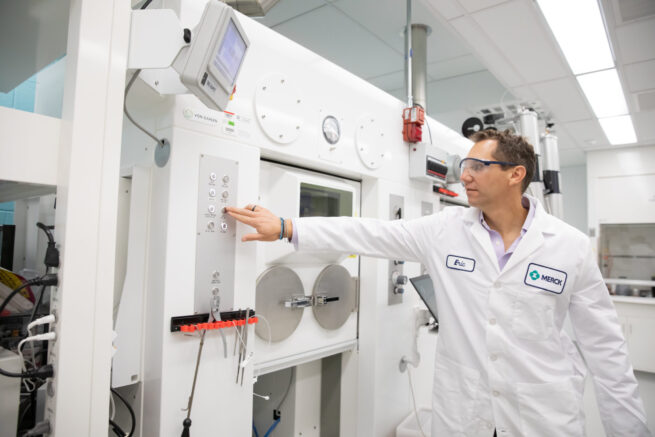
Extending the Institute’s reach and audience, its Center for Leadership in Action offers intensive programs for leaders in business and industry, from entry-level managers to senior executives. In the first year of operation alone, the Institute has held 25 weeklong programs, training thousands of business leaders—and reached thousands more through its virtual programming partnerships, such as the one with the Stanford University Business School.
“It’s kind of like getting a degree in a week,” one executive observed. “The opportunity to have educational and interactive experiences built into one. The classroom sessions take your brain right to the brink, and then you get a chance to press reset in a social scenario with your team, building off of these different opportunities.”
“Medal of Honor winners are so humble, there’s so much humility in what they do. But you start hearing some of the experiences that they’ve had, it’s so surreal. The word I used was “pure.” They’re in the essence of pure decision-making, for life-or-death scenarios, taking care of themselves and others. It gives you hope that you can make tough decisions; they can do it in the face of death, and we have time to make choices. It’s amazing.”
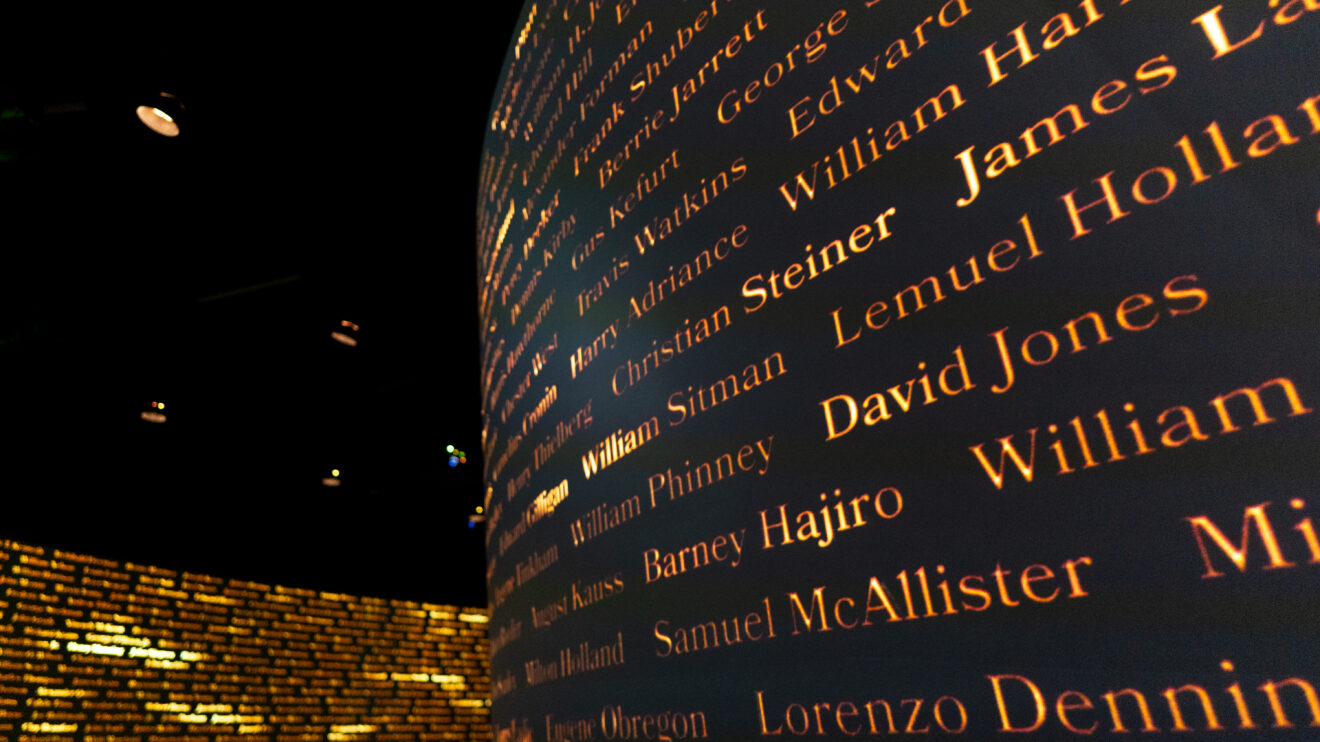
The National Medal of Honor Museum
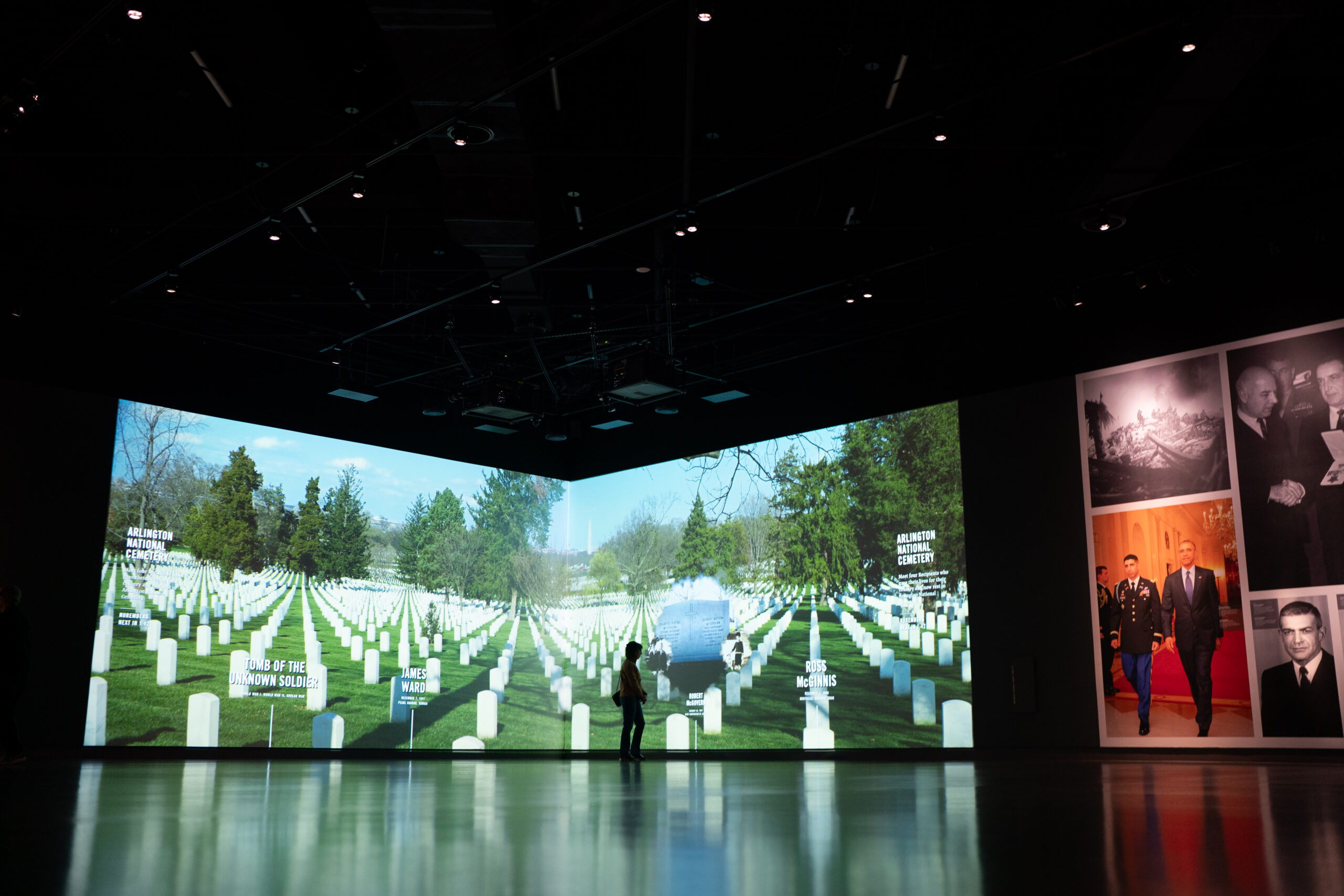
“The moment in the Museum that really resonated with me—and just pulled at my heartstrings—was when you’re in that main circular room, hearing the Huey chopper sounds, and you see the images of real-life situations that our fellow Americans engaged in, and the decisions they faced. Schools everywhere should engage with the Museum, to learn the lessons of integrity, and what sacrifice and citizenship really mean. ”
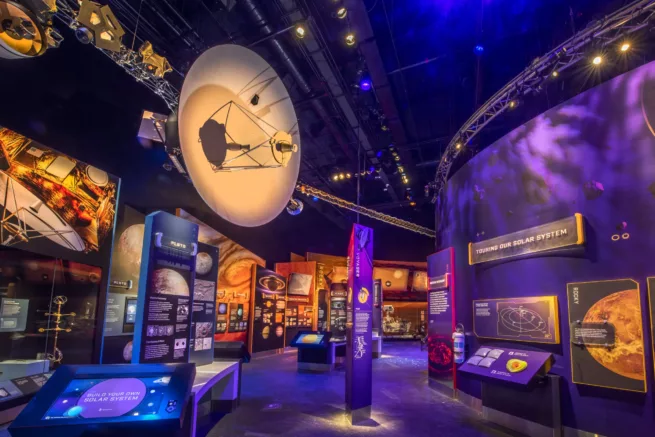
The Griffin Institute sits within and complements the National Medal of Honor Museum in Arlington, Texas, which opened in March 2025 and has rapidly become one of the area’s most popular destinations. Indeed, in 2026, USA Today named the Museum one of the top ten best new museums in America for its vision and outsized impact.
Located within a 102,000-square-foot landmark building within a five-acre campus, the Museum’s state-of-the-art exhibitions present both the wartime experiences and peacetime journeys of dozens of Medal of Honor recipients, while an interactive feature allows visitors to virtually interface with living recipients. Through this feature, the next generation can ask a variety of questions about their background, what they remember from their time in service, and how they spent their lives before, during, and after their Medal of Honor action.
“I think it was really important for our kids to come. They were able to see Medal of Honor recipients that they wouldn’t necessarily see on a daily basis. I had one student say, “It makes me want to serve.” And another student said, “It seems like they got a medal for the worst day of their life.” I thought that was really powerful: that [the recipients] were recognized for their actions and it was very likely the worst day of their lives. And I thought that was really impactful for our kids. And I thought, 'Oh, I’m going to cry.'””
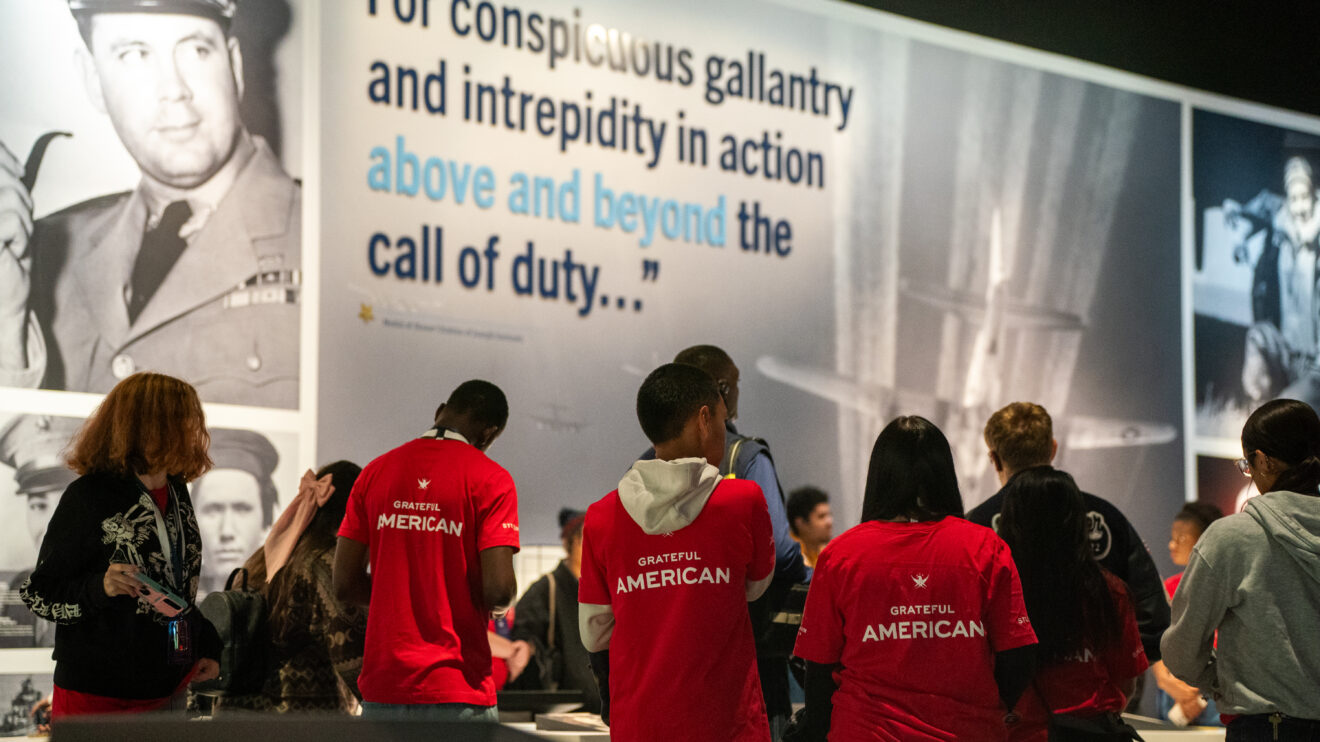
The Lessons of Honor
Integrity, courage, commitment, sacrifice, citizenship, and patriotism: these are the six enduring values that the Medal of Honor represents. Through its innovative onsite programs and its widely circulated curriculum, the National Medal of Honor Griffin Institute has become one of the country’s preeminent institutions in advancing these values, with the goal of encouraging every American to live a life of success and purpose, and for our nation to realize its full potential.
“The Medal of Honor experience for us has really been special. As our students began to study this curriculum and these heroes, they learned to not only appreciate who those people were, but they learned to see those values in themselves, to see that they had the same capacity to become those heroes. And the Medal of Honor reinforces everything we want kids to know about themselves. Community, integrity, respect, commitment, safety, everything we need our kids to know today is really embedded in what the Medal of Honor teaches us”
With its mission to preserve the American experiment and to advance solutions to the most challenging problems of our time, the Griffin Institute and the National Medal of Honor Museum have quickly emerged as crucial institutions working to equip the future leaders of America.
“The Medal of Honor isn’t just about us; it’s about those that we fought next to. And [we want] people to understand that the freedom that they have, day in, day out, was made by a lot of people. I wear this medal for the men I fought with. I also wear it for those that have given the ultimate. I held 18-year-old boys in my arms. I heard their last words, and I saw the last breath of life come out of their body. I know that the freedom that we enjoy daily has been paid for in full.”