Bringing Prehistoric Discoveries to Life at Carnegie Museum of Natural History
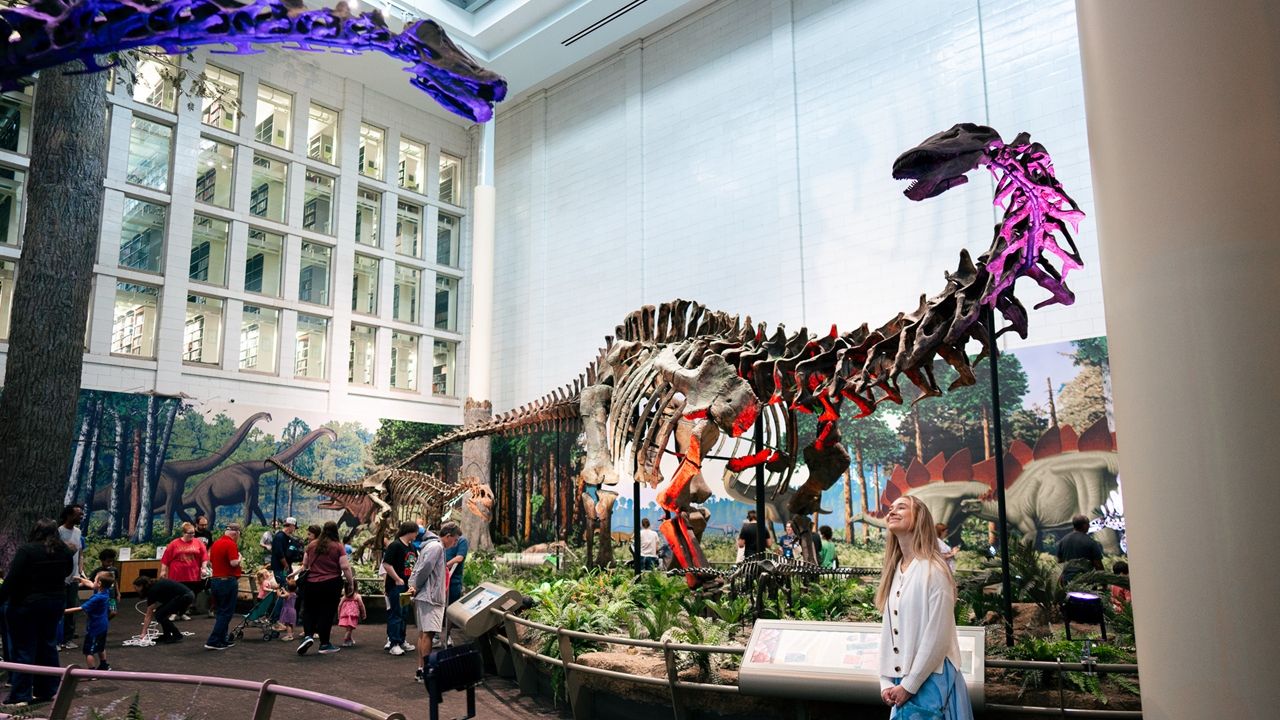
The fossils include an adult sauropod nicknamed “Daisy” and two juveniles, “Lucky” and “Lucy.” Discovered together in approximately 150-million-year-old rocks in Wyoming, these long-necked, plant-eating dinosaurs offer a rare opportunity for scientists to study how sauropods grew, developed, and potentially interacted with one another.
Ken’s support will help establish a new, publicly visible fossil preparation laboratory, where visitors can watch paleontologists carefully uncover, preserve, and study the specimens. The process can take years, and much of this work traditionally happens out of public view. The new facility will bring visitors closer to scientific discovery as it unfolds.
“Daisy, Lucky, and Lucy offer an extraordinary window into our planet’s history. I am proud to partner with Carnegie Museum of Natural History to share these remarkable dinosaurs with the public and give visitors a front-row seat to the work of paleontologists. I hope these experiences spark curiosity and inspire the next generation of scientists.”
The gift will also support research into the fossils, including the study of exceptionally rare fossilized skin samples, helping scientists deepen their understanding of these prehistoric giants.
“This partnership presents an extraordinary opportunity to bring the public directly into the practice of science. Through the generosity of Mr. Griffin, visitors will be able to witness that work as it happens—from fossil preparation and conservation to research and discovery—while helping us deepen our understanding of some of the most remarkable dinosaurs ever found.”
Carnegie Museum of Natural History is home to one of the world’s most significant dinosaur collections and has helped shape the field of paleontology for more than a century. Ken’s support builds on his longstanding commitment to advancing scientific research and expanding public access to natural history, including his support for the Griffin Dinosaur Experience and Griffin Halls of Evolving Planets at Chicago’s Field Museum and his loan of “Apex,” the most complete Stegosaurus ever discovered, to the American Museum of Natural History in New York.
Through these initiatives, Ken continues to help bring the wonders of natural history to life, inspiring curiosity and discovery for generations to come.
Learn more about this announcement here
