Charting a New Course for Academic Success
1. Introduction
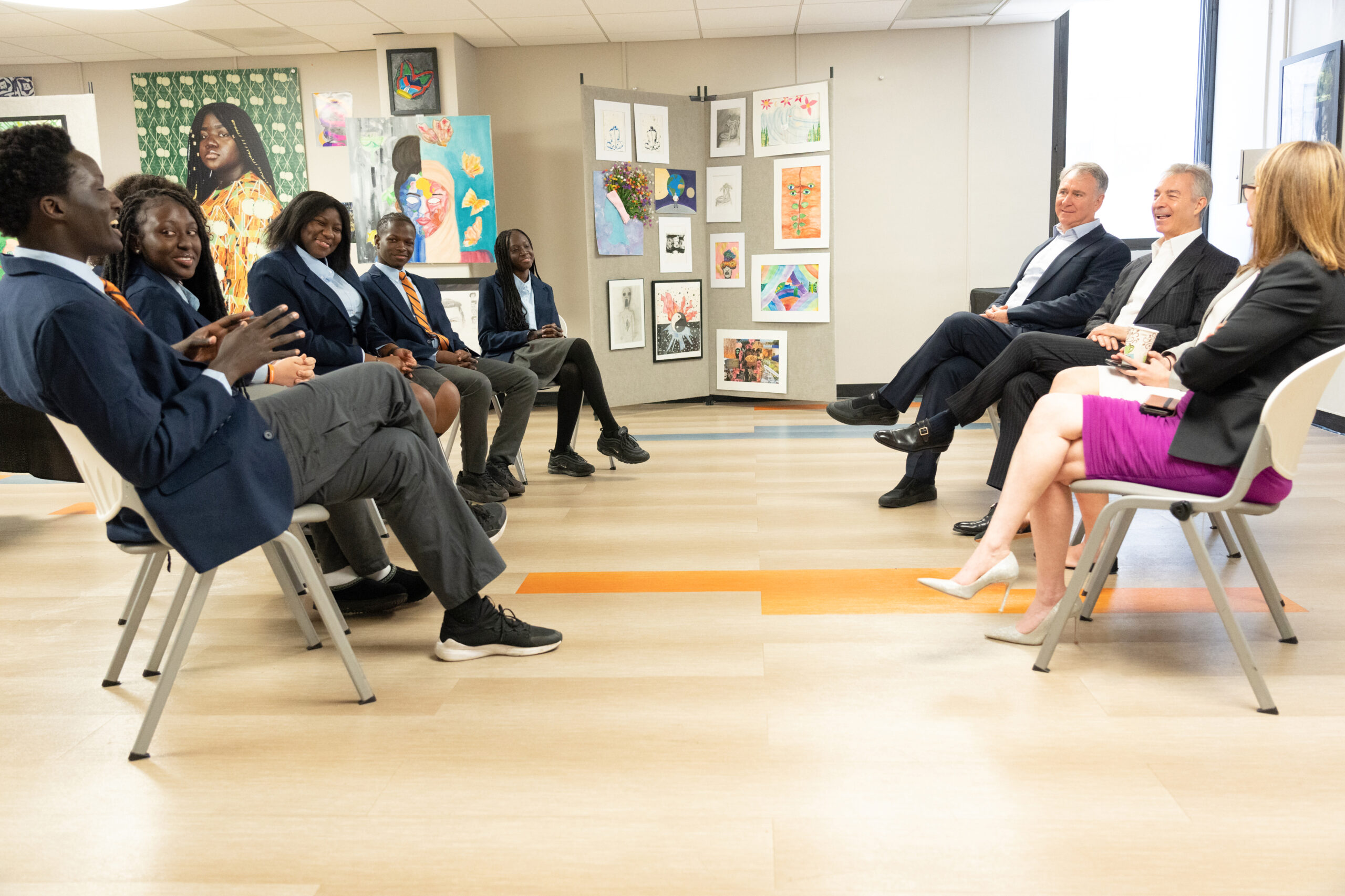
I've walked the halls of Success. I have spoken with the students. I love the culture of optimism, rigor, and most importantly, high expectations. Teachers and leaders who know that these children can have remarkable lives and make the personal commitment to bring the best out of these children.
Introduction
In the fall of 2005, Eva Moskowitz, a longtime New York education advocate, decided it was time to put words into action.
For six years, as an elected member of New York’s City Council and head of its Education Committee, Moskowitz—a native-born New York public-school graduate with a doctorate in history from Johns Hopkins—had been outspoken about the limits of the city’s public education system, arguing that many schools lacked sufficient rigor, and that students needed to be challenged as well as engaged to remain and prosper in class. Many public school leaders, she said, underestimated the capabilities, and felt—wrongly, in her view—that students from low-income households “cannot achieve at the highest levels.”
In 2005, when she lost to a candidate backed by the teachers union, Moskowitz’s political career ended. Within days, two financial investors who wanted to open a charter-school offered her a job leading it. Moskowitz embraced the offer and for the next eight months worked furiously to create her vision of an academically rigorous alternative to primary and secondary education.
Blueprint for Success
True to its name, the school proved a success from the start, and, with the support of then-Mayor Michael R. Bloomberg—who hailed the original Harlem Success Academy as “the poster child for this country”—the initiative soon began to expand, with three new schools opening in 2008.
Within little more than a decade, Success Academy grew to become the largest public charter-school network in New York City, with an enrollment of over 20,000 students in 59 elementary, middle, and high schools in Manhattan, Brooklyn, Queens, and the Bronx.
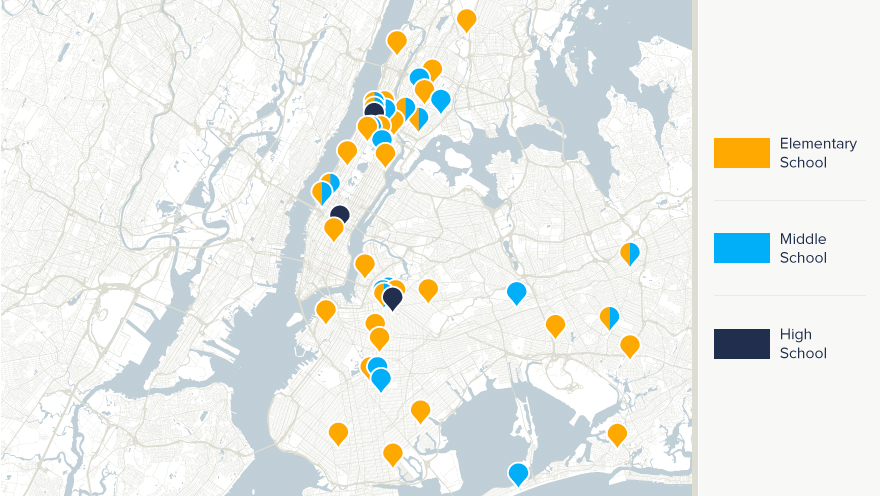
Admitted by random public lottery, Success Academy’s students—mostly children of color from low-income households in the city’s most economically disadvantaged neighborhoods—began to regularly outperform those in the most affluent suburban areas and in gifted-and-talented schools.
For nine years in a row, its students’ acceptance rate to four-year colleges has been 100%—meaning that every one of its high school graduates has gone on to an undergraduate institution. Furthermore, nearly two-thirds of those have been accepted at our nation’s most selective colleges, including Ivy League institutions and dozens of other top colleges and universities across the country.
In 2025, Success Academy ranked #1 in Math and #2 in Reading/ELA out of more than 700+ K-12 school districts and charter networks in New York State. Every student graduating from Success Academy has taken at least one Advanced Placement exam in high school.
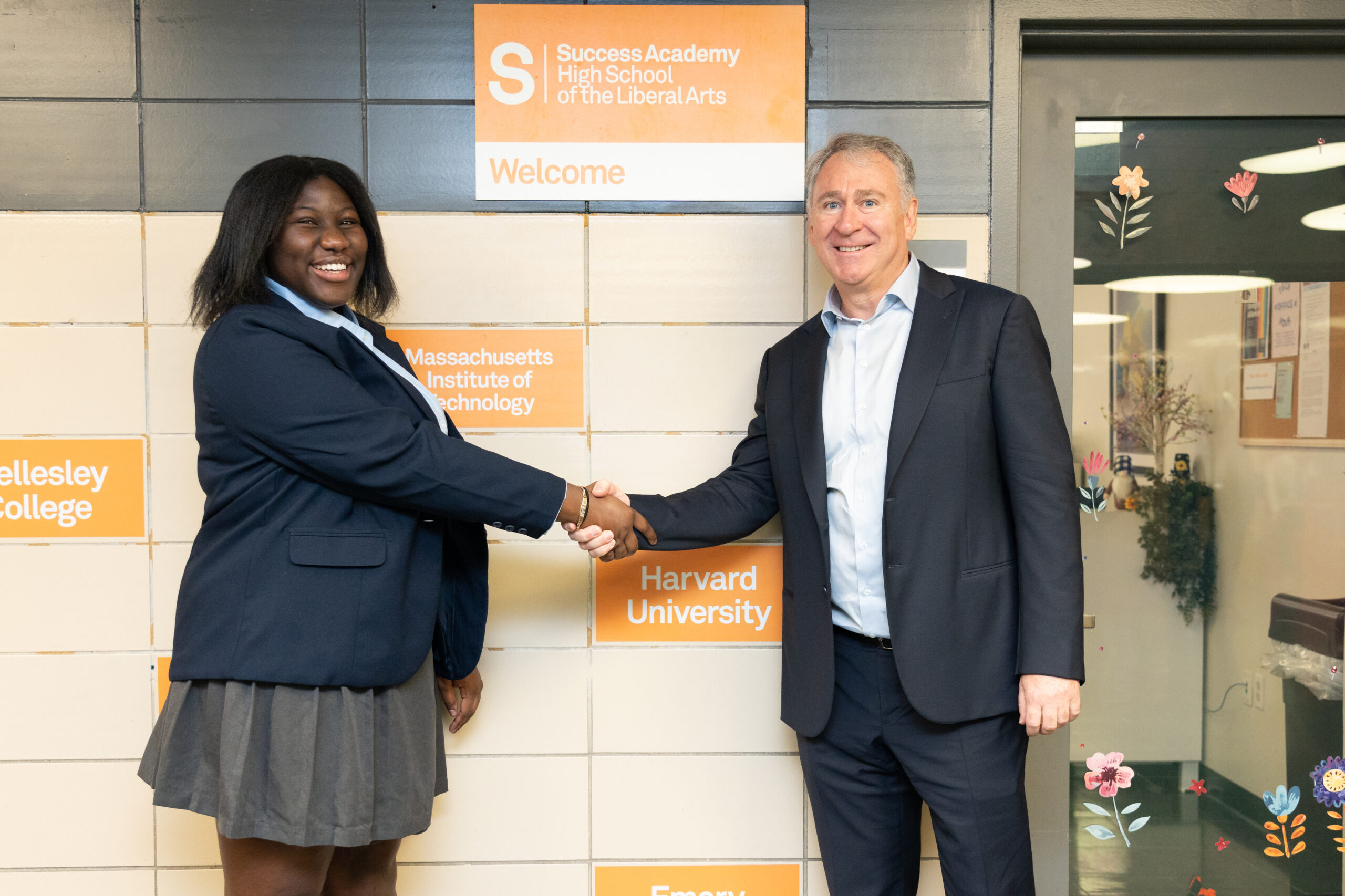
“We are not just closing the achievement gap—we’re reversing it. Our largely poor Black and brown kids are outperforming affluent suburban school districts in academic achievement. We’re doing that for $5,000 less per pupil.”
A Higher Standard
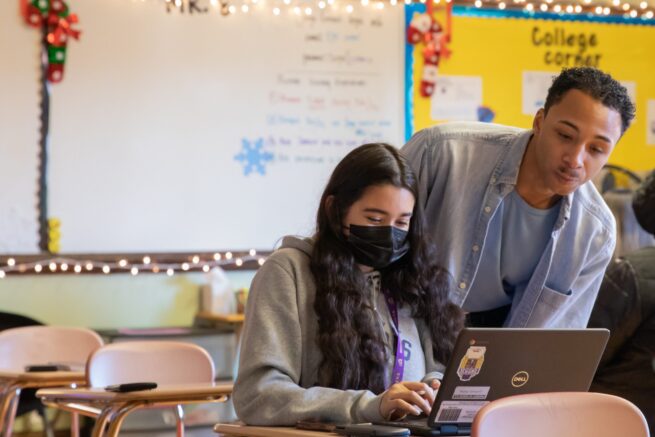
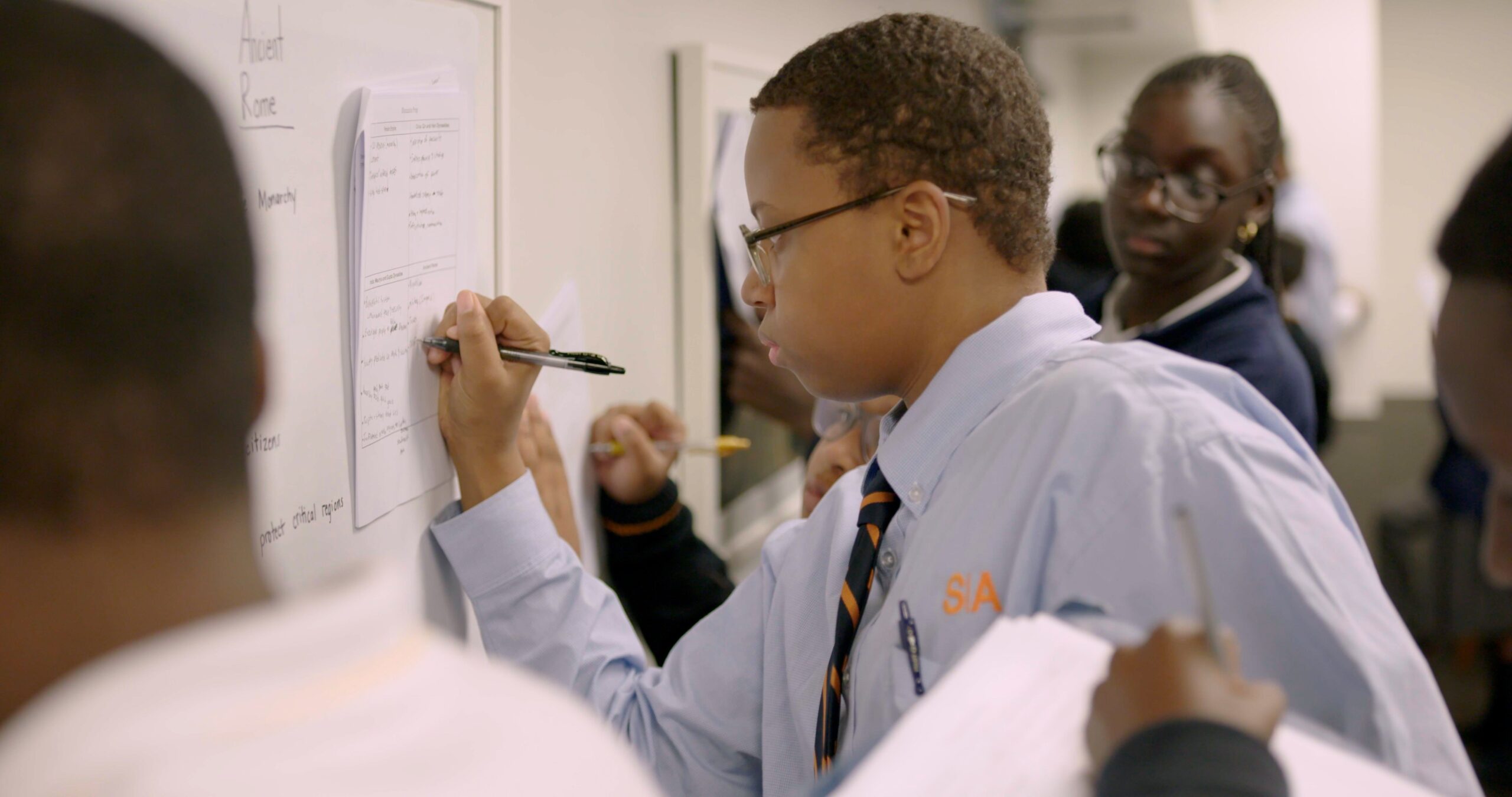
At the heart of this remarkable achievement was Moskowitz’s impassioned belief, one shared by the hundreds of Success Academy teachers and administrators, that “all children can thrive and achieve in school, in college, and in life.” Success Academy’s distinctive K-12 approach was developed as a holistic thirteen-year educational trajectory, combining a high level of academic rigor and expectations, deep engagement with students, and an emphasis on data-driven evidence and results.
“It's ingrained into our culture. Our fifth-graders know you are already sitting in a math class that is preparing you for pre-algebra because by the time you are fifteen, you’ll be taking an AP class and getting ready for college. That’s just what we do. So it is in our culture; it is in our design. It is something that’s genuinely a part of what we do here every day. ”
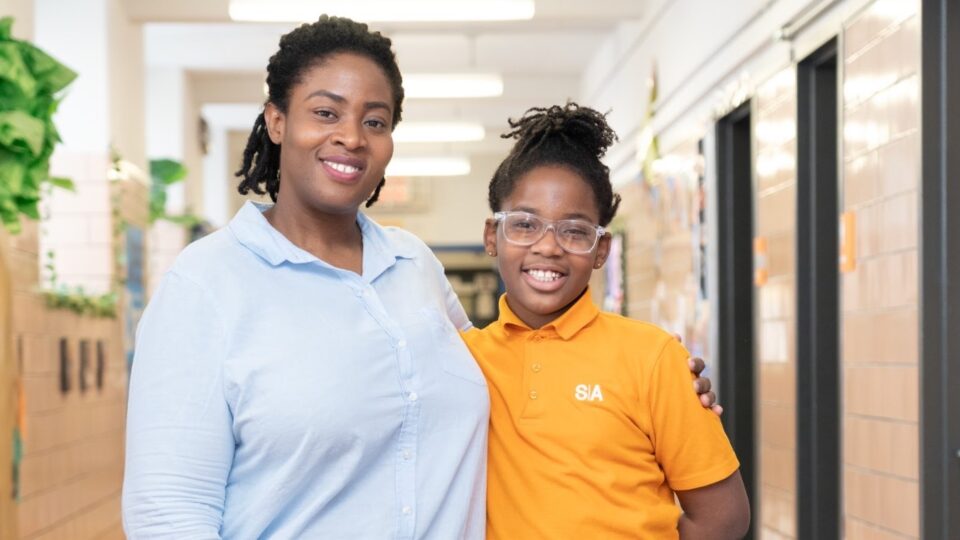
When I first came to the States from Ghana I had a neighbor whose child wore this eye-catching uniform, and I always saw students wearing the same uniform and lining up neatly to go into the school across the street. I thought to myself, this is very organized, I like it. My neighbor offered to give me a tour of the school and what I saw had me absolutely certain this is where my kids belong. Eventually we were given a spot at Success Academy Harlem 5. Now, my eighth-grader tells me with complete certainty that she wants to be a lawyer…[My other daughter] leads the entire school; she has the highest GPA.
On the one hand, Success Academy students are held to a higher standard of commitment than those at many public schools—including longer school days and a longer school year to help ensure their academic mastery—and, almost without exception, they respond to those higher expectations by rising to the occasion, empowered by a sense of personal agency. In this meritocratic environment where the fruits of success are visible, these students make the most of their opportunity and work hard—charting a path to success in school and far beyond. “Success gave me the tools that I needed to do well academically—not just having knowledge but having the mindset to do well,” observes Razaq Aribidesi, an Academy alumnus who is now getting his master’s degree in robotics at the University of Pennsylvania.
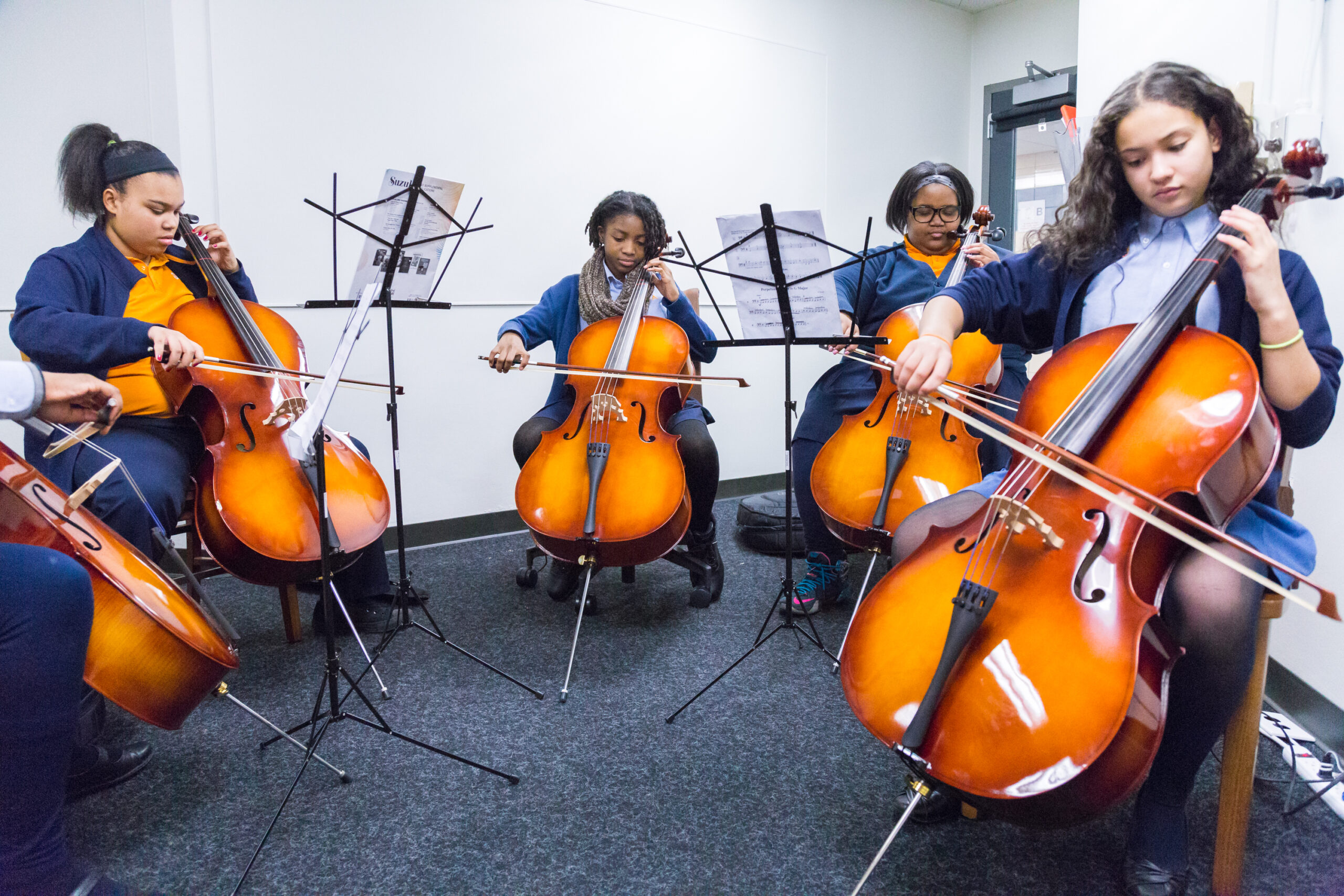
Success Academy students are immersed in a rich array of offerings and activities, notably chess and debate clubs—and a diverse range of cultural classes and programs—dance, art, art history, musical theater, to name a few—that provide a well-rounded learning experience. “We offer art and music and dance and cross-country track and a full complement of offerings,” Moskowitz notes, “because we want kids to enjoy school… to love coming.”
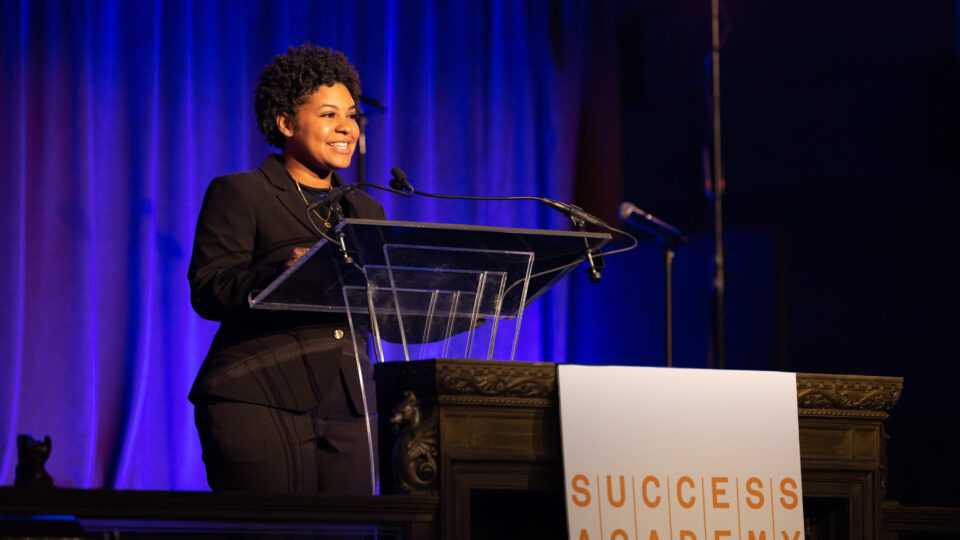
During my time at Success Academy, my teachers went beyond the lessons of mathematics, science, literature, and history. In elementary school they taught me to fall in love with reading. In middle school they gave us primary sources and encouraged us to analyze and think. My honors literature teacher taught me about compassion, my theater teacher taught about confidence, and I learned perseverance in AP biology. They all helped me, a girl from the Bronx, dream big about my future. Now I’m studying genetics, calculus, and piano at Dickinson College. I also plan on going to medical school and becoming a surgeon.
In 2018, Griffin Catalyst provided a $10-million gift to Success Academy to fund the opening of three new public middle schools and sustain the growth of several others. In 2023, it expanded its support of Success Academy with a $25-million gift to increase enrollment by 50%, putting Success Academy on a path to serve more than 30,000 New York City students, who, like the thousands of orange-uniformed students who have come before, will have opportunities for advancement and growth that they might otherwise never have dreamed of.
On to Miami
“Griffin Catalyst’s gift paves the way for Success Academy to provide an excellent education to children of economically disadvantaged families in Miami. The innovation, choice, and continuous improvement that are in Miami’s DNA have granted us a favorable environment, and with Ken Griffin’s powerful gift we are keen to begin serving this dynamic community.”
Griffin Catalyst’s 2023 gift to Success Academy was intended not only to increase access for New York City students but also to further elevate the network as a national model demonstrating the impact and promise of a charter school education for students of all backgrounds. “Success Academy is a road map not just for New York but our country,” Ken Griffin declared at the time. “This gift is about momentum.”
That momentum and the opportunity to serve students at an even larger scale inspired Eva Moskowitz and her team to think about what might be possible beyond New York City. With Ken Griffin’s enthusiastic support, the team began formulating plans to replicate their success in Florida, with its rich history of supporting and implementing educational freedom. One such initiative is the Schools of Hope program, which was created in 2017 to provide students in persistently low-performing schools with additional educational options. Championed by Ken, Governor Ron DeSantis, House Speaker Danny Perez, and the Florida legislature, crucial reforms to the program were enacted in 2025, enabling high-performing charters to leverage open, unused space in public schools for the benefit of students. These changes hold enormous potential: in Miami alone, more than 130,000 public school desks sit empty. Under Schools of Hope, that otherwise wasted capacity can be utilized for educational purposes by high-performing public charter schools—like Success Academy—promoting excellence and accountability.
To turn this extraordinary promise into reality, in September 2025 Griffin Catalyst Founder Ken Griffin announced a landmark $50-million gift to support Success Academy’s expansion to Miami. The network is expected to open its first slate of schools in the 2027–28 school year and, in time, expand access to Success Academy’s demonstrated record of educational excellence to tens of thousands of young Floridians and their families.
“Ken Griffin’s generous support of Success Academy reflects his commitment to civic leadership and deep belief in the importance of education for all children. In Florida, nearly 1.4 million students are utilizing a school choice option to access an education that fits their individual needs. Thanks to Ken’s investment, Florida families and students will have yet another available opportunity to receive high-quality education in our state. ”